HOPE FOR DEMOCRATS FROM NORTH CAROLINA

March 27, 2025, Wake Forest, NC—Coming out of last Fall’s national election, Democrats can find hope at the state level, including North Carolina. In particular, Democratic NC Governor Josh Stein was elected and is starting his first term, and Democratic NC Attorney General Jeff Jackson won and has since assumed some influence in national politics. The federal level is dominated by Republicans and US President Donald Trump, who began his second term with a whirlwind of executive orders taken right from Project 2025, a far-right, reactionary policy platform that President Trump completely denied any connection to during his election campaign last year.

At the state level, here in North Carolina, however, we now have a sense of where incoming Democratic Governor Josh Stein is taking his first term. In addition, we see how the newly-elected Democratic Attorney General Jeff Jackson is challenging the Trump administration in federal courts to help stall Trump’s reactionary political agenda. In particular, Jackson has enjoined the State of North Carolina to several federal lawsuits countering Trump’s agenda, including specifically, a lawsuit countering an effort by President Trump to amend the US constitution by executive order on the issue of birthright citizenship for children of immigrants.

On day one of President Donald Trump’s second term, he signed an executive order ending birthright citizenship for children of immigrants. Immediately thereafter, several Democratic-leaning states challenged his order in court with a federal lawsuit. In North Carolina, a purple state, newly-elected, Democratic NC Attorney General Jeff Jackson joined those lawsuits. Referring to the Fourteenth Amendment, ratified in 1868, which enshrines citizenship as a constitutional right for all children born in America, Jackson was quoted as saying, “The Constitution leaves no room for executive reinterpretation on this matter—it is clear, settled, and binding. This order seeks to undermine that clarity, creating legal uncertainty and denying fundamental rights to children born in this country” (News & Observer, on-line, newsobserver.com, 1/21/2025; News & Observer, on-line, newsobserver.com, 3/14/2025).

NC Attorney General Jeff Jackson

Specifically, President Trump’s order would bar citizenship to any children born in the United States to parents without at least one parent being a citizen or legal permanent resident. Birthright citizenship has been recognized as an established legal right for the children of immigrants in America since the law was upheld by the US Supreme Court in 1898 in the case, United States v. Wong Kim Ark (News & Observer, on-line, newsobserver.com, 1/21/2025). Donald Trump’s executive order would deny this constitutional right and overturn over a century of US legal precedent.

I think President Trump’s executive order would deny a large part of who we are as Americans. While I acknowledge that cracking down on immigration was a central plank of Trump’s election campaign last year, I think we, as Americans, are still a nation of immigrants. The Statue of Liberty in New York Harbor attests to this aspect of American life, in the famous inscription on the statue: “Give me your tired, your poor, Your huddled masses yearning to breathe free.” Donald Trump misunderstood this message; he follows the old joke, instead: “Regarding your poor, your tired, your huddled masses yearning to breathe free. Send them my regards.”

As Americans, we must oppose this rights-grab by executive order by Donald Trump. I support North Carolina AG Jeff Jackson’s legal effort, with the 17 other states enjoined to the lawsuit, to overturn this executive order.

The current status of this executive order is that it has been suspended by the federal courts. It will be heard, ultimately, by the US Supreme Court, which will rule on the matter. I can hardly believe that President Trump is attempting to amend the US Constitution by executive order, as affirmed by the US Supreme Court. Last I checked, there exists a drawn-out process for amending the US constitution, which President Trump lacks the political support to achieve in the US Congress or in ¾ of the State legislatures. I only hope that level heads prevail at the US Supreme Court, and the Court chooses not to overturn this basic right for Americans, and not to overturn more than one century of legal precedent in this country.

Our Democratic party hero in North Carolina, NC Attorney General Jeff Jackson, is not entirely in the clear on this lawsuit in North Carolina, however. The Republican majorities in both houses of the NC State legislature have introduced bills to remove his authority to file any lawsuit against the Trump administration in Washington. North Carolina is, of course, a purple state. On March 11, the NC Senate passed a version of this bill. It all comes down to one vote in the NC House. In the NC House, Republicans fall one vote short of a supermajority needed to override the Governor’s veto. If the NC House passes this bill in the near future, as I expect it will, the question becomes, will the Governor veto it? The newly-elected Democratic Governor, NC’s Josh Stein, I believe will probably veto the legislation, I hope. If Gov. Stein vetoes the bills, then it all comes down to one vote in the NC House, on whether the Republican-led legislature can override that veto. If so, then North Carolina would be removed from that federal lawsuit. If not, then NC AG Jeff Jackson can continue to be the Democratic hero from the State of North Carolina that he is now. Jackson could continue to defend our basic rights as Americans from his perch as AG in North Carolina. I hope Jackson will be able to remain a party to his federal lawsuits, including this one, and will be allowed to continue to challenge the Trump administration in court. North Carolina is a purple state, and the battle in North Carolina will be close (News & Observer, 3/23/2025, p. 19A, print edition; News & Observer, on-line, newsobserver.com, 3/14/2025).

This political battle highlights how important in North Carolina the recent election of NC Governor Josh Stein, a Democrat, is, in addition to the election of the Democratic Attorney General. Without Josh Stein, a Democrat, in the Governor’s office, the Republicans would be able to easily block Jeff Jackson from entering this and other federal lawsuits. That is the glimmer of hope for Democrats in the recent national election in the State of North Carolina.

Now, we are seeing how incoming Democratic Governor Josh Stein’s first term is looking, on its own terms, as well. Josh Stein’s first priority was not Washington, in fact, but North Carolina. Stein’s top priority was rebuilding Western North Carolina after the damage wrought by Hurricane Helene. To that end, Stein signed his first piece of legislation into law, working with the Republicans in the State legislature, last week. That state law provides the fourth round of state funding for recovery from Hurricane Helene. Providing funds for recovery to Western North Carolina remains Gov. Josh Stein’s top priority, and he receives largely bi-partisan support on the issue (News & Observer, 3/23/2025, p. 19A, print edition).

NC Governor Josh Stein

On Wednesday, March 19, Governor Stein presented his first budget to the NC General Assembly and the public at-large. Stein found some agreement and some disagreement on various issues within North Carolina from the Republicans who lead both houses of the State Assembly. On the famous Democratic Party issue of teacher pay, going back to the former NC Governor, Democrat Roy Cooper, Stein has found agreement from NC Republicans. Stein wishes to raise starting teacher pay to $53,000 by 2027, according to Dawn Baumgartner Vaughan, writing in the News & Observer (3/23/2025, p. 19A, print edition). Stein wants North Carolina to be “the highest in the Southeast.” Similarly, Republican NC House Speaker Destin Hall was quoted as saying in the News & Observer that he wants North Carolina to be “as highly ranked in the South as we can be” (3/23/2025, p. 19A, print edition). I hope Stein and the Republican leadership in North Carolina can make significant headway in raising teacher pay in North Carolina.

Gov. Stein and Republicans in North Carolina disagree on private school vouchers, state income taxes, and a statewide school bond issue. Gov. Stein has also drawn attention to the federal effort in Congress by Republican leadership there to cut Medicaid funding. If the federal government cuts Medicaid by $880 billion, then North Carolina would see its Medicaid expansion evaporate. This issue took ten years of wrangling to adopt in North Carolina, and it would be gone in a breath, if Republicans in the US Congress slash the program. NC Gov. Stein mentioned this in his first State of the State address earlier this year, but has not made it an issue otherwise in North Carolina, at this time.

Governor Josh Stein’s first term is coming into vision, now that his first proposed budget has been released. We are looking at June for the NC legislature to pass its budget, and then send the budget to Gov. Stein for his signature. This timeline is only tentative, I should note, however, since the Republicans in the NC state legislature have been known to disagree with themselves, and pass extremely late budgets, in the recent past. In any case, business in North Carolina this year seems to be proceeding at a regular pace, under Governor Josh Stein and the Republican legislature, with or without US President Donald Trump.

That being said, Democrats are lucky to have elected their own party in the Governor’s office and the NC Attorney General’s office this past year. The Democrats in the executive branch of North Carolina are currently able to provide a counter-weight to President Donald Trump’s reactionary agenda in Washington this year. North Carolina remains a purple state, but the Democrats here will not remain silent.

On the issue of birthright citizenship, for example, as currently guaranteed in the US Constitution, Democrats in North Carolina have joined the fight against President Trump. Time will tell whether NC Attorney General Jeff Jackson will be able to stay in this court battle, and time will tell how much of President Donald Trump’s agenda will stand or fall in the halls and the courts of Washington, DC. I hope we can block Trump’s reactionary agenda.

—Nicholas Patti

Wake Forest, NC

USA

Additional Sources: 

News and Observer, Raleigh, NC: 3/23/2025, p. 19A, print edition; 1/21/2025, on-line, newsobserver.com; “Will the Supreme Court Overturn Birthright Citizenship? What to know,”  3/14/2025, on-line, newsobserver.com; 2/27/2025, on-line, newsobserver.com; “NC Republicans move fast on DOGE, DEI, Helene, immigration. How 2025 session is playing out,” 3/14/2025, on-line, newsobserver.com.

WRAL news, WRAL, WRAL+, Raleigh, NC, 2025, NBC, television news.

CNN, 2025.

ABC news, 2025, television news.

VOTE! Up and Down the Ticket in North Carolina, United States

by Nicholas Patti

The United States of America is a democracy, and one thing that means is that we, the American people, have the chance to vote for our president. In North Carolina, this year is also an election year for our governor. Use it or lose it! My first shout-out on this blog is to urge everyone in North Carolina, and in fact, throughout the United States, to vote. We must exercise our right to vote, if we wish to maintain our country as a democracy. As to whom to vote for, each of us makes up our own mind about each candidate, taking into account policy stances, political party, and yes, the values and character of each candidate. Consider this post my endorsement post on this blog for these two offices, in particular: the president of the United States, and the governor of the State of North Carolina. The important thing is, however, that each person who is a citizen of this country takes up his or her responsibility and duty as a citizen, and votes.

Let us begin with the American president. I would like to add my voice to those Democratic Party convention delegates this year who chanted, “Thank you, Joe!” to current President Joe Biden when he took the stage and addressed the Democratic Party convention this year. I think President Joe Biden has done a bang-up job as an American president during his term, and I thank him for his almost four years of public service as our president, and for his decades of service in American government as vice-president and U.S. senator, before that. He has had a long and terrific career as an elected official serving the American public in Washington.

Having said that, I think it was wise for him to step aside as the Democratic Party candidate for president in this election for the next term. In his speech at the convention this year, President Biden said he was putting country before personal ambition. He argued that we must keep former President Donald Trump out of the executive office, utilizing the ballot box, at all costs. I disagree, humbly. I think President Biden was not placing country before personal ambition, but rather, placing political party before personal ambition. It is true the election looked lost for President Biden when our President made the decision to pull out as a candidate. What President Biden did was to hand-select an alternate candidate whom our current President believed could beat Donald Trump at the ballot box, and make her the Democratic Party candidate. This move would be the Democrats’ best shot at holding the White House in Democratic Party hands. Thus, after ignoring many calls to do so, President Joe Biden handed over the baton to the next generation of leadership in the Democratic Party, and likely, in our country. I follow President Joe Biden’s lead in choosing our current U.S. Vice President Kamala Harris as my preferred candidate for our next American president.

As a much younger candidate than either President Biden or former President Donald Trump, Kamala Harris would represent handing leadership of our country over to the next generation of leadership, if elected. Her selection by the Democrats represented a political disaster for President Trump and the Republicans, at the time, since she was much younger than either of the two previous candidates, Biden and Trump. The Republican Party attack ads and attack lines at the first debate between Biden and Trump, that President Biden was too old and infirm to govern, now fell entirely flat. In fact, these attacks would tarnish President Trump himself, moreso than anyone else, now that he was the only older white guy in the race, and Democratic Party candidate Kamala Harris could paint herself as the clear alternative for the future.

Democratic presidential candidate Kamala Harris introduced herself, described who she is, and outlined what her priorities would be, if elected president, in the Democratic Convention this year. Although she remains politically liberal, she did an end-run to the political center, and reassured all that she would uphold America’s position in the world, militarily, economically, politically, and in concert with traditional U.S. allies across the world. In addition, she promised to cut costs for the American consumer and to fight for the American working and middle class. She contrasted her position with former President Donald Trump, who she claimed would fight only for himself and for billionaires. Whether that is true or not, or only a Democratic Party attack line against the Republican nominee for president, I leave to each individual voter to decide. 

What I do know is that after this election for U.S. president, either Kamala Harris or Donald Trump will be our next president. For better or worse, the American people will live with either one for the next four years. We are lucky that we, the American people, have the right to vote and choose which one will be our next president. I plan to vote for Kamala Harris. Either way, I urge every American citizen to make the choice and vote.

Vice President Kamala Harris, Democratic Party nominee for President
Vert_WIN_20240822_13_45_10_Pro

My Poetry Book

Enjoy this eclectic, often comic collection of poems by me. One poem, “News Junkie,” covers former President Trump’s first term, pre-pandemic. Price includes taxes and shipping & handling.

$15.00

Let me turn my focus from the race for US president to the race for governor of the State of North Carolina. Before I make my endorsement, let me review who the candidates are, from the Democratic and Republican parties, for the office. When voting for governor of North Carolina, North Carolinian voters may choose from the Democratic candidate, Josh Stein, current North Carolina Attorney General, and the Republican candidate, Mark Robinson, current North Carolina Lieutenant Governor. Both candidates claim to be for the working, sometimes struggling, families of North Carolina. Who is the best choice?

Josh Stein is a reliable Democrat, promising to bring Democratic policies to the state, and continuing on the legacy that the popular current governor, Democrat Roy Cooper, is leaving to the state. Democrat Roy Cooper has brought, for example, medicaid expansion to the North Carolina, which Governor Cooper and the Democrats of North Carolina fought for roughly 10 years to enact as law in North Carolina. Josh Stein would continue that legacy of having a Democrat in the Governor’s mansion. 

On crime, Republicans have attacked Josh Stein as soft on crime, largely because he is a Democrat. Fighting crime is a hot-button issue for Republicans. However, Josh Stein has countered that, as the current state Attorney General, he has been fighting crime in North Carolina for years. No one accuses the Republican of being soft on crime.

The issue of choice, or abortion, separates the two candidates. Josh Stein is pro-choice, similar to the current Governor, Roy Cooper. Mark Robinson is pro-life. Robinson has waffled on the extent of his pro-life views, flipping between supporting the current anti-abortion law on the books in North Carolina, and calling for an even more stringent anti-abortion law. The current law bans abortions in North Carolina, with notable exceptions, but the question is six or twelve weeks into the pregnancy, when abortion would become illegal in North Carolina. Six weeks would be sooner than the current law in North Carolina, and Robinson has said he would support a six-week ban. He has qualified his position, however, by saying that the legislature has already enacted the current law, and the power to change the law to restrict abortion even further is not up to him, but the state legislature.

I am pro-choice and I support Democratic candidate Josh Stein on this issue.

Then, there is the question of character and background. The latest news, which made the national news, is a sex scandal concerning the Republican candidate, Mark Robinson. According to CNN, Robinson went on a porn website ten years ago, before he was in politics, and made disconcerting comments. He called himself a “black Nazi,” and endorsed slavery, saying he would buy a few slaves. When interviewed about this scandal by CNN after the report was aired, Robinson denied the whole affair. Robinson called it a lynching of him, using AI, the internet, and cable news. It looks to me that CNN did not make the story up, however, and that the story is true.

The next response Robinson had to this scandal was to state that he is remaining in the race, that he is not dropping out because of this one incident, the truth of which he denies. I agree that he should stay in the race and let the voters of North Carolina decide if this one example of essentially sexual misconduct via an on-line porn site disqualifies him from the highest executive office in North Carolina, or not.

Later, just today, September 20, 2024, on CNN, former North Carolina Governor, Republican Pat McCrory, threw Robinson under the bus. Former Governor Pat McCrory said that Mark Robinson is unfit to be governor. McCrory thought that the Republican Party of North Carolina should do a better job vetting their candidate for governor. McCrory said that for Lieutenant Governor, the job Robinson currently holds, that he would be an ok candidate. Not for governor, McCrory said. McCrory’s opinion is that Robinson has said and done things in the past that should preclude him from holding the highest office in the state. McCrory thinks the governor candidate should be vetted more than for the Lieutenant Governor, since the Governor’s office is more high-profile. McCrory said that the press will look into the full background of the candidate moreso for the governor’s office than the lieutenant governor’s. McCrory said he was vetted by the Republican Party in North Carolina before he became the candidate, and ultimately, the Governor of North Carolina. He continued, that the Republican Party of North Carolina knew these things about Robinson’s questionable background, but chose him anyway. The reason that McCrory gave that the Republican Party of North Carolina chose Robinson for the candidacy is that Robinson is a very good public speaker. McCrory said Robinson is very populist and gives such good speeches, he became very popular. For McCrory, however, it was not just this latest scandal that disqualified Robinson. McCrory said that there are numerous things about Robinson’s background that calls into question his character and fitness for the highest office of the state. McCrory admitted it is too late under North Carolina election law to switch candidates, so the question is academic.

One thing that former Governor Pat McCrory did say was that North Carolina is a purple state. Voters often split their tickets in North Carolina. He said that any questions about Robinson’s influence on the top of the ticket, the U.S. president, cannot be easily discerned. Robinson could bring down other Republicans up and down the ticket, or voters in North Carolina could split their tickets. The implication is that even if voters reject Robinson, they could still vote for Republican Donald Trump for U.S. president.

I think the question of character is relevant for the office of governor. Democrat Josh Stein is a Jew, he is liberal to moderate, and he is the current Attorney General. Can you imagine that Josh Stein’s opponent, Mark Robinson, called himself a Nazi once, who would want to own a slave? Josh Stein is Jewish. The holocaust must be remembered, regarding Nazis, slavery, and Jews. Mark Robinson’s comments are abhorrent.

In defense of Mark Robinson, however, he was using the services of a porn website. These traffic in sexual fantasies with the goal of sexual pleasure for the user. There is another concept at work here. That is the concept of mental slavery. The idea here is that actual slavery has been abolished, but mental slavery persists. It seems that in this on-line porn posting, Mark Robinson was engaging in mental slavery, as the owner, of course, for his own sexual pleasure. Let me note that praying in the Protestant Christian faith frees one from mental slavery, especially in the United States. Robinson has been shown in videos preaching from the pulpit of a black Protestant Church. Suffice it to say, Mark Robinson has been saved, in a Protestant Christian point of view, since that on-line posting. Robinson today disavows that earlier statement he made, on the porn website, some years ago. Would Robinson as governor promote mental slavery or fight to abolish mental slavery? The comment on the porn website sheds doubt on that question, but he disavows that he ever even made that remark. His Protestant Christian faith, which he proudly embraces, suggests Robinson would be squarely on the side of emancipation from mental slavery, to paraphrase the reggae singer, Bob Marley. It seems to me, however, that in that comment Robinson made on the porn website years ago, Robinson was still caught, as a “bad boy,” smack dab in the middle of the mindset of mental slavery. Of course, it should be noted, in the comment on the porn website, Robinson was not a mental slave, he was an owner. The point is to abolish the mindset of mental slavery, entirely.

People derive their sexual pleasure however they derive their sexual pleasure. I am not one to judge on that basis. My only question is, can we trust someone who might be struggling with the concept of mental slavery to be our governor? Is he going to try to make a prisoner, for example, of the State of North Carolina, a mental slave? This is an important question, I think. I think we might take the opportunity to discuss mental slavery, at this point, rather than simply treating this as a sex scandal and demonstrating unfitness for higher office.

I would like to see a reporter ask Mark Robinson if he has heard of mental slavery, and what he thinks about it? Given that he once endorsed it in writing, I think that is a legitimate question.

Both candidates for North Carolina can be asked this question. For example, as NC Attorney General, would Josh Stein allow any correction officer in North Carolina to make any prisoner believe that they were a slave, and I do mean, while incarcerated? This could potentially be used to control the prisoner. It is my sincere hope that, in addition to fighting crime, that the rights of prisoners while incarcerated should be upheld. No one should be made to feel that they are enslaved, even if they were currently imprisoned. I would like to hear both candidates comment on this one example, and on mental slavery, in general.

In any case, Josh Stein has not endorsed slavery in writing. Mark Robinson has. However, Mark Robinson is himself a black man in America, in North Carolina, in particular. Although Mark Robinson was having a sexual fantasy, at the time, as an owner, on a porn website, I think the question is still relevant. It is even more relevant as Robinson is running for the highest executive office in our state.

Anyway, that is what former Governor Pat McCrory is talking about.  Character. Myself, I do not think one wild sexual fantasy on a porn website ten years ago necessarily disqualifies one from holding higher office. Pat McCrory is correct about the media and the opposition in politics digging up the dirt on any questionable, certainly scandalous, activity and positions from the past. Ultimately, it is up to the voters of North Carolina to decide.

If it is not clear already, let me make my endorsement for the office of Governor of North Carolina clear. I plan to vote for the Democrat, Josh Stein. I base my endorsement both on policy and personality issues.

I urge all North Carolinians to vote, however, for either candidate, or for independents, for both Governor and President of the United States. I urge all Americans to vote in this year’s presidential election, also.

NC Attorney General Josh Stein, Democratic candidate for Governor
Mark Robinson, Lieutenant Governor of NC, Republican candidate for Governor

—Nicholas Patti

Wake Forest, NC

September 20, 2024

Sources:

News and Observer, Raleigh, NC, multiple articles, 2024.

CNN, 9/20/2024, 9/19/2024, television news.

WRAL news, NBC affiliate, Raleigh, NC, television news.

ABC news, shown over local ABC affiliate, Raleigh, NC, television news.

Photos: all photos complements of respective campaign websites.

Medicaid Expansion in North Carolina Set to Become Law with 2023 State Budget

by Nicholas Patti

September 24, 2023, Wake Forest, NC—When it comes to enacting Medicaid expansion in North Carolina, ya gotta do what you gotta do.

At least, that is, according to Democratic Governor Roy Cooper. Calling the 2023 NC state budget a “bad budget,” the Governor has decided to allow it to become law after 10 days from its passage this past Friday, without his signature, according to Dawn Baumgartner Vaughan, writing for the News and Observer (Raleigh, NC, 9/23/2023, digital edition).

Gov. Cooper’s reason for allowing this budget to become law was Medicaid expansion: “I will not allow people who are crying for help to wait any longer, so I am directing our Department of Health and Human Services to begin today the process for expanding Medicaid while allowing this budget to become law without my signature,” Cooper was quoted as saying in the News and Observer (Raleigh, NC, 9/23/2023, digital edition).

Medicaid expansion will provide health care coverage to roughly 600,000 uninsured people in North Carolina, according to Gov. Roy Cooper, as quoted in the News and Observer (Raleigh, NC, 9/22/2023, “NC State Budget Passes GOP-controlled Legislature, Cooper Will Let it Become Law. Here’s Why,” newsobserver.com). Allow me to explain the context. Medicaid expansion will fill in a gap left over a decade ago when Obamacare passed, federally, and covered most Americans. These 600,000 uninsured North Carolinians represent the working poor in North Carolina, people who fall into a gap between traditional Medicaid for the poor, and Obamacare coverage for regular workers who lack workplace coverage, otherwise, and who must pay a small premium. Medicaid expansion fills that gap, and covers the working poor, previously uninsured, for no premium.

Enacting Medicaid expansion in North Carolina arrives now after 10 years of delays, due to resistance from some sectors of the Republican party in the state. Medicaid expansion has long been a policy goal of Democratic Governor Roy Cooper.

Republicans in North Carolina deserve credit, however, for changing their minds and delivering on Medicaid expansion this year. It will come with the enactment of the state budget, which Medicaid expansion was tied to when it passed, separately, last Spring.

This Medicaid expansion represents a policy achievement in North Carolina this year, after a decade’s worth of effort, I would argue. Governor Cooper noted the timeline while criticizing the legislature for not acting sooner (News and Observer, Raleigh, NC, 9/22/2023, website article, newsobserver.com).

Republican state legislative leaders are rightly proud of their work this year. “…I think that’s an indication that this budget is a solid budget, something that’s good for the state of North Carolina,” said NC Senate leader Phil Berger, Republican, on Friday, following the budget’s passage in his chamber, as quoted in the News and Observer (Raleigh, NC, 9/23/2023, digital edition). Berger cited the $2 billion of funds for water and sewer projects statewide, as well as tax reductions and Medicaid expansion, all included in the budget, according to Dawn Baumgartner Vaughan, reporting for the News and Observer (Raleigh, NC, 9/23/2023, digital edition).

While the budget was working its way through final passage, another Republican representative praised it this way: “This budget is built on key investments in our state’s infrastructure, meeting our needs in health care, education, transportation, manufacturing, and tourism, just to name a few,” Rep. Donny Lambeth, Republican, was quoted as saying in the News and Observer (Raleigh, NC, 9/22/2023, digital edition).

The budget includes, also, an average of 7% raises for teachers, over two years, and raises for most state employees, as reported by Luciana Perez Uribe and Avi Bajpai in the News and Observer (Raleigh, NC, 9/22/2023, digital edition). In addition, the budget moves more appointment powers, for state boards and the judiciary, to the legislature, and away from Governor Cooper, in the executive branch, as reported on Spectrum News 1 (Raleigh, NC, 9/23/2023, Spectrum cable television news channel, 1 pm broadcast).

Governor Cooper has said that, despite the raises for teachers, the budget “shortchanges our schools… and prioritizes power grabs.” He warned that “many of its provisions will face legal action,” he was quoted as saying in the News and Observer (Raleigh, NC, 9/23/2023, digital edition).

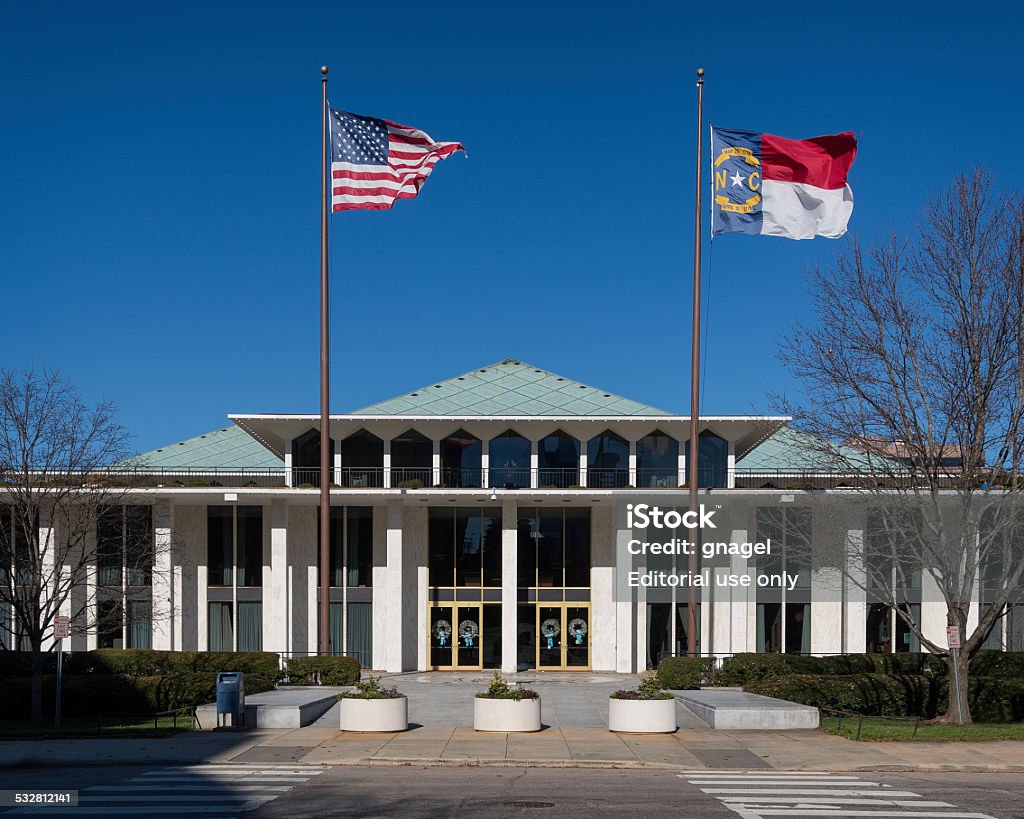
istockphoto-532812141-1024x1024
Raleigh, North Carolina — North Carolina Legislative Building on a clear, winter afternoon

Expanding casino gambling was not included in the budget, which spends roughly $30 billion of taxpayer money, according to the News and Observer (Raleigh, NC, 9/23/2023, digital edition; 9/20/2023, digital edition). Too many people, and their representatives in the state legislature, believed that casinos, even with the extra jobs in rural areas and extra revenue coming to state government; too many people felt that casinos were fundamentally inconsistent with their vision of a good, wholesome Southern culture.

That vision of an almost utopian Southern culture was laid out in the final chapter of William Faulkner’s classic Southern novel, The Sound and the Fury (1929). This chapter involved a Sunday service in a fictional Southern Protestant church. Needless to say, this vision did not include casino gambling.

I would point out, however, that video lottery terminals have long been a fixture of Southern cities in North Carolina. These are currently illegal and are continually being shut down. In addition to casinos, these would have been made legal, as well, according to the News and Observer (Raleigh, NC, 9/20/2023, digital edition).

Coming back to reality today in the South in North Carolina, there are currently two options available already, now, for North Carolinians to gamble, today. These casinos include slot machines, which work on-site via video. One option is the Cherokee casino in Cherokee, North Carolina, in the mountains in Western North Carolina. The second option is right across the state line in Danville, Virginia, in Southern Virginia. This second option is a Caesars casino that is already open and which serves many customer-gamblers driving from North Carolina across state lines to Danville, Virginia, according to a recent report on WRAL news (Raleigh, NC, reported from Danville, VA, NBC, Chan. 3 on Spectrum Cable television, Raleigh).

This NC budget merely failed to legalize and expand casino gambling beyond these two options, which already exist. I am in favor of legalizing casino gambling, since I believe it is a rewarding form of entertainment, mainly, for the casino customers. The house (casino) provides a thrill, which is the chance to win money for your bets, in exchange for your money, which are your losses to the house, in the main, predominant instance. Personally, I see nothing intrinsically wrong with this form of entertainment, primarily, except when customer-gamblers spend and/or lose too much money. That is called gambling irresponsibly. There should be telephone help lines available for all gamblers to teach responsible gaming, and to fight any gambling addiction. These lines should be open and available, from the state regulating authority, at all hours during casino open hours. This way, a potentially addicted gambler can call the state gambling help line, instead of betting and losing all of their money in an irresponsible bet. I am serious about this. Not everyone is taught how to gamble responsibly, and limit their losses, and some gamble irresponsibly, and harm themselves, financially, in the process. Along with legalization, regulation, and taxation, there should be support and education for how to gamble responsibly. This is called responsible gaming. It can be fun, although one usually does lose some money, in the process.

In any case, expanding gambling in North Carolina is not happening, at this time. I support expanding gambling options, beyond what already exist, although with requisite support and education to foster responsible gaming and to fight any kind of gambling addiction. In addition, I do not have a problem with leaving the gambling to the Native Americans in what amounts to a gambling monopoly inside the state. Glutting the market is not necessarily good business sense, especially when it comes to gambling.

On balance, I give credit to Republican legislative leaders in North Carolina, including House Speaker Tim Moore, Republican, and Senate leader Phil Berger, also a Republican, for enacting a new NC state budget, and for finally expanding Medicaid in North Carolina. The business of state government has been taken care of in North Carolina, although largely along Republican lines and vision.

Enacting Medicaid expansion in North Carolina represents the achievement of a longer-term policy goal of mostly Democrats, however, I would point out. Governor Roy Cooper, Democrat, deserves credit for allowing this achievement to take effect.

Although I would have preferred a new NC state budget that followed more of a Democratic vision, as expressed by Governor Cooper, Democrat, I applaud all state leaders in North Carolina, Democrat and Republican, for finishing the job, finally, and for taking care of the people’s business. Republican legislative leaders and the Democratic governor proved able to pass a new NC state budget, and more to the point, to expand Medicaid, finally.

For this, they deserve credit.

—Nicholas Patti

Wake Forest, NC

USA

Additional Sources:

This blog: post, 4/1/2023; post, 10/17/2022.  Address: nickpattifeatures.com.

News and Observer, Raleigh, NC:  9/23/2023, digital edition; 9/22/2023, digital edition; 9/22/2023, website article, newsobserver.com; 9/20/2023, digital edition.

Spectrum News 1, Raleigh, NC, 9/23/2023, Channels 1, 14, Spectrum cable television.

WRAL news, WRAL, Raleigh, NC, 9/22/2023, NBC, Channel 3, Spectrum cable television.

WUNC, 91.5 FM, Chapel Hill, NC, 9/22/2023, NPR-affiliate, radio, broadcast and internet.

Medicaid Expansion in North Carolina: Will it Make a Difference?

by Nicholas Patti

April 1, 2023, Raleigh, NC—The big news this past week is that former President Donald Trump was indicted on criminal charges in New York City related to his hush money payments to porn actress Stormy Daniels in 2016. I consider the criminal case against him in New York City to be entirely garbage, although I will not spend more time discussing this issue. Instead, I will turn my focus to North Carolina, where Medicaid expansion was passed in an historic achievement for the governor, the legislature, and the working poor in this State. However, how much of a difference will this passage really make for the people of North Carolina, in terms of sheer numbers—how many people will now become eligible, how many people are on or off the rolls after all is said and done, for example? The numbers look promising, but not as dramatic as previously reported.

Last year, quoting newspaper sources in Raleigh, NC, on this blog, I estimated that roughly 500,000 people would benefit from Medicaid expansion in North Carolina (“The Mid-terms, Medicaid Expansion in North Carolina, and Other Issues,” Raleigh, NC, 10/17/2022, nickpattifeatures.com). Now, in 2023, at the time of passage by the NC State legislature, the NC Department of Health and Human Services (DHHS) says the measure would insure roughly 600,000 additional people, according to Heidi Perez-Moreno and Kyle Ingram, reporting for the News and Observer (Raleigh, NC, 3/24/2023, print edition, p. 1A). That number is significant for the State of North Carolina.

There is a caveat, however. At this time, some hundreds of thousands of people stand to lose their Medicaid coverage in North Carolina. This unfortunate development comes from the end of a COVID-era policy in which the federal government temporarily increased funding for Medicaid. This funding and policy restriction ended March 31st of this year. As a result, North Carolina will resume re-certifying people for Medicaid on an annual basis. The North Carolina DHHS expects around 300,000 people to lose their health care coverage or see a substantial reduction in benefits during the next year, according to Luciana Perez Uribe Guinassi, writing for the News and Observer (Raleigh, NC, 3/17/2023, digital edition).

Subtract 300,000 from 600,000. The number you end up with is 300,000 additional people gaining Medicaid coverage in North Carolina, taking into account both Medicaid expansion and the renewal of re-certifying people for the program, including new denials. 300,000 or so additional people receiving Medicaid benefits than in 2022 is significant. This number is less significant than 600,000 people, however. It represents only one-half the previously-projected impact of Medicaid expansion in North Carolina. All told, the new legislation, Medicaid expansion, still would make a difference. Without it, a total of 900,000 people would lack benefits, instead of a net gain of 300,000. There would be a net loss of 300,000, with another 600,000 remaining ineligible. Medicaid expansion still makes a difference in 2023, but with the new federal policy changes and funding cuts, Medicaid expansion will not result in a watershed of new, uninsured people gaining Medicaid health coverage for the first time. That said, 300,000 additional people receiving Medicaid benefits over the next year at a time of federal budget cuts, post-pandemic, is nothing to shake a stick at. I should note that Medicaid expansion in North Carolina comes with its own, additional federal funding to cover the difference, representing federal funding that North Carolina had previously been turning down, before Medicaid expansion.

If you are one of the additional 300,000 people who should receive Medicaid health benefits in North Carolina over the next year, consider yourself lucky. The North Carolina legislature and NC Governor Roy Cooper have your back. You are lucky that you do not count yourself one of the 900,000 people who would otherwise lose their benefits over the next year, or who would remain simply ineligible for the benefit, in the first place. Now, you should have health benefits. You will have access to Medicaid.

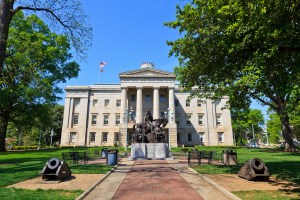
North Carolina State Capitol Building
North Carolina State Capitol Building, Raleigh, NC, by JillLang, c. 2019, http://www.istockphoto.com

There is one more caveat to Medicaid expansion taking effect in North Carolina, however. NC legislators stipulated that it will not take effect until the 2023 state budget passes. This budget is due for this State in June of this year. Writing for the News and Observer (Raleigh, NC, 3/28/2023, digital edition), Dawn Baumgartner Vaughan makes an educated guess that, unlike in previous years, this year’s budget will pass without too much trouble, because Republicans in the legislature are very close to a veto-proof majority, and because the budget contains Medicaid expansion, which has long been a priority for Governor Roy Cooper, a Democrat.

Let us hope the 2023 budget passes without delays, and that Medicaid expansion in North Carolina becomes law, and takes effect.

It should be noted that Medicaid expansion has long been a policy priority of the Governor, Roy Cooper. Its passage represents a victory for him, politically, in particular. “With this bill, more uninsured North Carolinians can avoid financial ruin from unpaid medical bills,” Governor Cooper is quoted as saying in the News and Observer (Raleigh, NC, 3/28/2023, digital edition). “More rural hospitals will be able to stay open, with their jobs.”

Governor cooper continued: “Businesses won’t lose as many good workers to illness or to care for a sick family member,” he is quoted as saying. “…People will have access to more doctors, nurses and mental health professionals because there will be more people who can pay them. It’s clear that this legislation I’m signing today will have a positive effect for all working families, even if they don’t directly get Medicaid” (News and Observer, Raleigh, NC, 3/28/2023, digital edition).

75391-rac-ncae-convention255b1255d
Governor Roy Cooper, campaign file photo

After years of trying, lawmakers in North Carolina passed Medicaid expansion, finally. Republican legislative leaders in NC deserve credit, also, including NC House Speaker Tim Moore and NC Senate leader Phil Berger. The one who really deserves the most praise for seeing this legislation through, however, is Governor Roy Cooper, Democrat. This issue has been one of his policy priorities for several years.

Kudos, once again, to North Carolina elected officials for finally finishing this job. The working poor of North Carolina will thank them.

Now, make sure to pass the budget, so this Medicaid expansion can take effect.

—Nicholas Patti

Raleigh, NC

USA

Additional sources:

This blog:  post, 10/17/2022.

News and Observer, Raleigh, NC:  3/28/2023, digital edition; 3/24-25/2023, print edition, pp. 1A, 7A, 10A; 3/23/2023, digital edition; 3/17/2023, digital edition; 3/16/2023, print edition, p. 3A; 3/12/2023, print edition, pp. 1A, 3A-7A, 18A.

The Mid-terms, Medicaid Expansion in North Carolina, and Other Issues

October 17, 2022, Raleigh, NC—Now in mid-October, 2022, the mid-term elections are fast approaching, here in the United States. Control of Congress in Washington, DC is up for grabs, and here in North Carolina, the questions are who will be the next Senator to represent the State, and who will control the NC State legislature? Will the rest of Governor Roy Cooper’s (Dem.) agenda be passed, most notably, Medicaid expansion, or will the voters hand over the State legislature, once again, to the incumbent party in control, the Republicans, and thus put the ka-bash on any hopes of further progressive politics passing into the next term?

Last I checked in on this blog, Medicaid expansion in North Carolina looked likely. Despite the Democratic Governor’s repeated calls to enact it, however, the Republican legislative leaders have failed to do so. Although it looked promising one year ago, agreement proved elusive, and no action has been taken. Instead, enactment of the progressive change that would expand access to healthcare in North Carolina to the working poor has failed. The effort became caught up in a bureaucratic pitfall called the Certificate of Need (CON) law in North Carolina, which governs how much healthcare providers are legally allowed to provide. When reforming the CON laws failed, so did Medicaid expansion.

Now, it’s the election. If voters care enough about insurance for the working poor, or about 500,000 people across North Carolina, then they will vote Democratic for the State legislature. Otherwise, our current stalemate will continue, most likely, and Medicaid expansion will not happen, not anytime in the near future. Now, it is up to the voters to decide.

For this reason alone, I would argue, people in North Carolina should vote by party affiliation, and award the Democratic Party control of the NC State legislature. Election Day is Tuesday, November 8th. By Wednesday, November 9th, we should all know who controls the State legislature here in Raleigh, North Carolina. As it currently stands, the outcome of that vote will determine the fate of what remains of Gov. Cooper’s agenda, and whether Medicaid coverage is offered to the working poor in North Carolina, or whether they will continue to be denied coverage, and thereby denied access to quality healthcare.

Another big race at stake in the election this year is for the next Senator of the State of North Carolina. Will it be the Democrat, Cheri Beasley, or the Republican, Ted Budd? Recent polls show the race is neck-and-neck, with Ted Budd holding a slight advantage, as the two candidates approach the finish line in this race (News and Observer, 10/9/2022, p. 18A). This race is one of the closely-watched races in this country that will decide which party controls the U.S. Senate. Since Roe vs. Wade was overturned recently by the U.S. Supreme Court, it is worth noting, also, that Beasley is pro-choice, and Budd is pro-life.

I endorse the Democrat, Cheri Beasley. I hope she wins this close race here in North Carolina, and I hope the Democratic Party retains control of the U.S. Senate, and in fact, both chambers of Congress in Washington, DC. Again, the vote is Tuesday, November 8th. We should know the honest results, statewide and nationally, soon thereafter.

I should take one step back from partisan politics, at this time, however. The war in Ukraine drags on. Thankfully, although the U.S. has been providing weapons for Ukraine, the U.S. itself is not directly involved in the war against Russia. That is good. I still believe, however, this is a war of Russian imperialism and Russian aggression against the sovereign nation of Ukraine, and I stand by the Ukrainian people’s right to defend themselves and their country. It is a question, for me, of the principle of the self-determination of peoples. Ukraine has the moral high-ground on this one, to my way of looking at it, no questions asked. I think President Joe Biden is handling the situation well.

That said, I continue to call for peace in the Ukraine, concerning all sides. This war in Ukraine between Russia and the Ukraine has proved devastating and tragic so far to the Ukrainian people. I call on all parties involved to engage in peace talks and end this war, immediately. Unfortunately, that prospect seems unlikely, at this time, but that is what I think should happen.

One promising note in the United States has been the overwhelming, if not quite unanimous, bi-partisan support for Ukraine in this war. It is good to see the two parties in Washington working together, when necessary.

Also, it is good to see the two parties coming together for the clean-up and recovery effort in Florida, which was hit so hard recently by Hurricane Ian. President Biden and Florida Governor Ron DeSantis (Republican) should be given credit for their bi-partisan support for the recovery effort in Florida.

Although it is crucial to vote in the mid-term election this November, only a few weeks away, it is good to remember that the two parties can work together when it comes to a national priority, such as the war in Ukraine, or a national emergency, such as for the recovery effort from Hurricane Ian, especially in Florida.

—Nicholas Patti

Raleigh, NC

USA


Additional sources:

This blog:  post, 2/22/2022; post, 12/5/2021.

News and Observer, Raleigh, NC:  10/9/2022, pp. 18A, 1, 4A-7A, 12A; 10/4/2022, p. 8A; 9/25/2022, p. 18A; 9/18/2022, p. 13B; 10/10/2022, p. 8A; 10/12/2022, p. 6B.

New York Times, 10/14/2022, pp. 1, A6.

WRAL news, Raleigh, NC, television; ABC news, national, evening, television; National Public Radio (NPR), news, radio.

graphic credit:

North Carolina stamp: © Gagarych | Dreamstime.com

Victories in Government in Washington and North Carolina this November

December 5, 2021, Raleigh, NC—Sometimes government gets things done, despite itself, and despite the ongoing, internecine partisan bickering that marks most of the life of government in America.

This November represented such a moment for America, and for the State of North Carolina, in particular. This November marked such a moment, a time when government took care of the people’s business, a time when rare bipartisanship prevailed in North Carolina with the adoption of a new state budget after three years of partisan wrangling. This real result bodes well for the political future of Democratic Governor Roy Cooper. In Washington, the story was not so much about bipartisanship, but about Democratic Party unity, following a poor showing this year for the Democrats in this year’s national election. This legislative result should bode well for President Biden’s next big legislative priority, the social spending bill, up for consideration this December, and it should bode well for the Democrats’ hopefully improved chances at putting forth a better showing in next year’s more significant mid-term national elections. Nationally and in the statehouse in North Carolina, the Democrats got things done. In North Carolina, the Republican leaders of the State legislature can claim credit, too.

Two years ago, in 2019, I wrote a post on this blog in which I excoriated Governor Cooper and the Republican leaders of the North Carolina State legislature for not agreeing to a budget to cover that year, 2019 (“North Carolina Still Without Budget, But I-77 Express Lanes in Charlotte Open,” nickpattifeatures.com, 11/18/2019).  Two more years passed, and finally, this past November, North Carolina political leaders agreed on and passed a budget. Writing in the News & Observer, of Raleigh, NC, Dawn Baumgartner Vaughan noted that it had been three years since the State had passed a budget. “In the end,” Vaughan wrote, “the spending plan had passed because after three years with no budget compromise, lawmakers of both parties and their constituents had run out of patience for any more delay, especially after the long-running coronavirus pandemic” (News and Observer, Raleigh, NC, 11/26-27/2021, p. 1A). She credited, also, the Democrats on the committee in 2021 who pushed for adoption and compromise, even though the budget failed to meet long-standing Democratic Party demands in North Carolina. Finally, on November 18, 2021, Governor Cooper signed the state budget into law (News and Observer, Raleigh, NC, 11/19-20/2021, p. 2A).

If it took that long to pass the budget, what caused the delay? What was so important that lawmakers could not agree for so long? Two issues stood out and caused disagreement. One: Medicaid expansion to cover the working poor. Two: teacher pay. On Medicaid expansion, we are talking about an estimated, roughly 634,000 people in North Carolina who have failed to gain Medicaid eligibility since 2019, according to Elizabeth Thompson, writing in the News and Observer (Raleigh, NC, 7/11/2019, on-line). Under Obamacare, or the Affordable Care Act, the federal government gives states the option to expand Medicaid coverage to the working poor, or people who fall in what is called the “coverage gap.” That is the group of people whose income is too high for Medicaid guidelines, but too little to receive federal subsidies to help with the cost of private insurance. Without state-level Medicaid expansion, these hundreds of thousands of people in North Carolina would continue to rely exclusively on hospital emergency rooms only for all of their medical care. They generally do not have a primary care doctor, either (News and Observer, Raleigh, NC, 7/11/2019, on-line). Anyone can see how this situation is unacceptable for working people, or anyone, but it remains the reality. This issue was a top sticking point for Governor Roy Cooper, since the Republican leadership of the NC House would not allow Medicaid expansion to provide coverage for these people. In the final budget that was adopted in November, 2021, NC Democrats still failed to obtain Medicaid expansion. Governor Roy Cooper has said he agrees with many parts of the new state budget, but would fight on in the future for those parts not included. “I will sign this budget, because on balance the good outweighs the bad,” Governor Cooper was quoted as saying in the News and Observer (Raleigh, NC, 11/26/2021, p. 14A). “While I believe that it is a budget of some missed opportunities and misguided policy, it is also a budget that we desperately need at this unique time in the history of our state.” Furthermore, Gov. Cooper said that the budget included many things that he deemed “critical to our state’s progress as we are emerging from this pandemic” (News and Observer, Raleigh, NC, 11/26-27/2021, p. 14A; 11/18/2021, p. 1A).

Although Medicaid expansion was not included in the 2021 budget, the North Carolina legislature will form a committee to study the issue for the future. With one estimate at $1.2 billion in federal funding to cover Medicaid expansion in 2022, if President Biden’s social spending bill passes, this committee could lead to adoption of Medicaid expansion in the future (News and Observer, Raleigh, NC, 12/1/2021, p. 5A). Currently, North Carolina is one of only 12 states, mostly in the Southeast, which have not expanded Medicaid. North Carolina Senate leader Phil Berger has already changed his mind, now supporting Medicaid expansion. Previously, he was concerned about the cost of the expansion. Now, he was quoted as saying, “I just don’t think the fiscal concerns I’ve had in the past about the cost of expansion are things to be worried about” (News and Observer, Raleigh, NC, 12/1/2021, p. 5A). Although the state failed to adopt Medicaid expansion at this time, there is hope that it will in the near future.

On teacher pay raises, the two sides compromised, and agreed on a number. This number ended up at 5% pay raises over two years, plus bonuses, and more for teachers in rural counties. Most state workers will also see a raise of 5% over two years, as well (News and Observer, Raleigh, NC, 12/1/2021, p. 6A).

The 2021 NC budget represented a compromise, but a good compromise. What is more, the Republican legislative leaders and Gov. Roy Cooper came together and took care of the people’s business, which on the state level, begins with the adoption of a state budget.

dreamstime_l_117017192

Raleigh, NC © Paul Brady | Dreamstime.com

All of this bodes well for Governor Roy Cooper’s political future. The Governor is in his second and final term, thanks to term limits. His future could include becoming the leader of the Democratic Governors Association, according to Dawn Baumgartner Vaughan of the News and Observer (Raleigh, NC, 11/26-27/2021, p. 14A). Currently, Gov. Cooper serves as the vice chair of that organization.

Equally important, I would argue, is how Gov. Cooper looks, following his performance leading the purple state, North Carolina, through three years without a budget, and finally reaching agreement with the Republican leadership in the legislature this year. Actually, I think that the Governor looks pretty good. Previously, he looked awful, for not being able to reach any agreement or compromise, and for leading the State without finishing the most basic of business, adopting a State budget. This is primary on the state level throughout the United States, for any single, individual state. This is the single most important piece of the people’s business that each state in the Union must attend to. Failure to do so is failing on the most basic responsibility of the people’s business on the state level. The Governor looked pretty bad on this score, until, that is, he reached a compromise with NC Republicans, and found a budget that he and North Carolina Democrats could live with.

What is even more important, I would argue, is why it took so long for Governor Cooper to attain responsible state government, with a current budget. That reason is he was fighting for the working poor of his State, North Carolina, to achieve coverage and access to health care, as newly allowed and encouraged by the Affordable Care Act, or Obamacare. The pressure is even greater from the federal level now, with the federal government promising to fund most of the expenses for the states (News and Observer, Raleigh, NC, 12/1/2021, p. 5A). It really is an outrage that we still do not have health insurance coverage or adequate health care for the working poor of North Carolina. We still need Medicaid expansion to provide that care and access. According to a study in 2019, we are talking about an estimated 600,000-plus people in North Carolina alone who lack that coverage and access to adequate health care (News and Observer,  Raleigh, NC, 7/11/2019, on-line). This is truly a noble fight. It is about basic access to health care, especially during the pandemic and during the recovery from the pandemic. I think Governor Roy Cooper is and was justified in taking on this fight, both for himself and for the State of North Carolina. Three years without a state budget is a steep price to pay to stand up for your values. I recommended compromise two years ago, in 2019, in an earlier post on this blog (“North Carolina Still Without Budget, But I-77 Express Lanes in Charlotte Open,” nickpattifeatures.com, 11/18/2019). With the government of North Carolina finally having reached compromise and having achieved a state budget this past November, this fight for basic health care for the working poor looks much better. Governor Roy Cooper did everything in his power to fight this good fight, and although he failed to win on this score, he made significant progress toward this goal in North Carolina, and he still took care of the State’s core business, the budget, in retrospect, as well. More work needs to be done. Hopefully, this new committee, combined with a more welcoming view on the issue from at least one leading state Republican, State Senate leader Phil Berger, can lead to the ultimate adoption of Medicaid expansion. Then we can fill in that crack in the foundation with concrete, properly, and prevent hundreds of thousands of working people in North Carolina from falling through that crack, regarding basic access to adequate health care and regarding finally obtaining health insurance for themselves, where they currently still lack access, even under Obamacare, or the Affordable Care Act. I think this current situation remains unconscionable. Governor Roy Cooper was right to prioritize this fight, and to continue that fight into the future.

Governor Cooper looks good, as of this past November, and he has now a political future. I wish him the best, for the remainder of his current term, and in whatever endeavor he pursues, after that.

In reaching this agreement on adopting a state budget in North Carolina, elected officials of both parties, Democrat and Republican, finally took care of the people’s business in North Carolina. Although they had been mostly squabbling over this and other issues over the past three years, this past November, they came together, reached an agreement, a compromise, and fulfilled their core responsibility in State government. This November marked a rare moment of bipartisanship in North Carolina, and it was desperately needed.

Now, both parties are returning to their former, usual, partisan ways. Just this past Thursday, December 2nd, Governor Cooper vetoed a Republican-backed bill regarding election integrity or voting rights and ballot access, depending on your perspective (News and Observer, Raleigh, NC, 12/3/2021, p. 2A). Aside from your opinion on this issue, my point is that the two parties disagreed once again on this key issue in North Carolina, and thus, basically, returned to partisan squabbling, once again. One outlook for the near future in North Carolina is that the entire NC General Assembly is up for re-election in 2022. That is 170 seats. Up in the air is the possibility that Republicans may or may not need any Democratic votes to override any of Gov. Cooper’s future vetoes, depending on whether NC Republicans win back a supermajority, or not. That is up for grabs in next year’s 2022 elections, according to Dawn Baumgartner Vaughan of the News and Observer (Raleigh, NC, 11/26-27/2021, p. 14A). I support the Democrats in 2022 in North Carolina, and I hope both parties can find it inside themselves in the State to adopt, finally, Medicaid expansion for the working poor.

In Washington, DC, the story was not so much about bipartisanship as it was about Democratic Party unity. Here, however, continued party unity into December, this month, is anybody’s guess. Similar to the bipartisanship in North Carolina, the Democratic Party unity we witnessed in November may well turn out to have been a fleeting phenomenon.

In Washington, DC, Congress passed and President Joe Biden signed the $1 trillion infrastructure bill into law. This law passed along strict party lines. Prior to the national elections on November 2nd, Democrats were divided, internally, with the progressives and the moderates at odds over the bill. After the election, in which they underperformed, Democrats found the unity to pass President Biden’s infrastructure bill. Next comes President Biden’s even larger social spending package, up for consideration this December. Although Democrats in Washington found unity to pass the infrastructure bill in November, the jury is out whether they can do the same on the social spending bill in December. For the sake of accomplishing President Joe Biden’s agenda, and for the sake of putting forth a better showing for voters ahead of next year’s mid-term elections, I hope the Democrats pass President Joe Biden’s social spending package. The Democrats’ fate next year in the mid-terms may hang in the balance (New York Times, 11/6/2021, p. A1; 11/4/2021, p.A15; “Democratic Voters See Many Losers in Party Schism, and One Winner: Trump,” New York Times, 10/3/2021).

For their part, Republicans were opposed to President Joe Biden’s and the Democrats’ national agenda, marked as it is by large amounts of new federal spending. US Senator Pat Toomey, a Republican from Pennsylvania, put it this way, as quoted in the Wall Street Journal on CNN, “They [the Democrats] are in the midst of an absolutely unprecedented, very damaging spending spree on a scale that we have never seen,” he said. “And they want us to come along and authorize the borrowing to help pay for it when we are totally opposed to what they’re doing” (Wall Street Journal, 9/27/2021, p. A1).

The Democrats’ victory in Washington in passing President Biden’s infrastructure bill in November followed party lines, and was adopted over the protest of the Republican Party. More Democratic Party unity will be required to overcome Republican opposition to President Joe Biden’s social spending bill this December.

Democrats have already won in the US House. On November 19, the House passed the $2 trillion social spending bill, sending it over for consideration to the Senate. “The House on Friday narrowly passed the centerpiece of President Joe Biden’s domestic agenda, approving $2 trillion in spending over the next decade to battle climate change, expand health care and reweave the nation’s social safety net, over the unanimous opposition of Republicans,” wrote Emily Cochran and Jonathan Weisman of the New York Times (“House Narrowly Passes Biden’s Social Safety Net and Climate Bill,” 11/19/2021).

It is imperative for Democrats to pass this bill in the Senate, and for President Joe Biden to sign it into law, if they are to position themselves for not a loss, but a victory in next year’s mid-term national elections. In the above quote, Cochran and Weisman describe this $2 trillion social spending bill as “the centerpiece” of his agenda. With the poor showing in this year’s national elections, Democrats need to show the voters of the United States that they can deliver, when they control the Congress and the Presidency, as they do now. Otherwise, the Democrats will be seen as a do-nothing party, a party of squabbling factions who cannot achieve their agenda. Republicans would gain from this next year, even more than they already did in this year’s election.

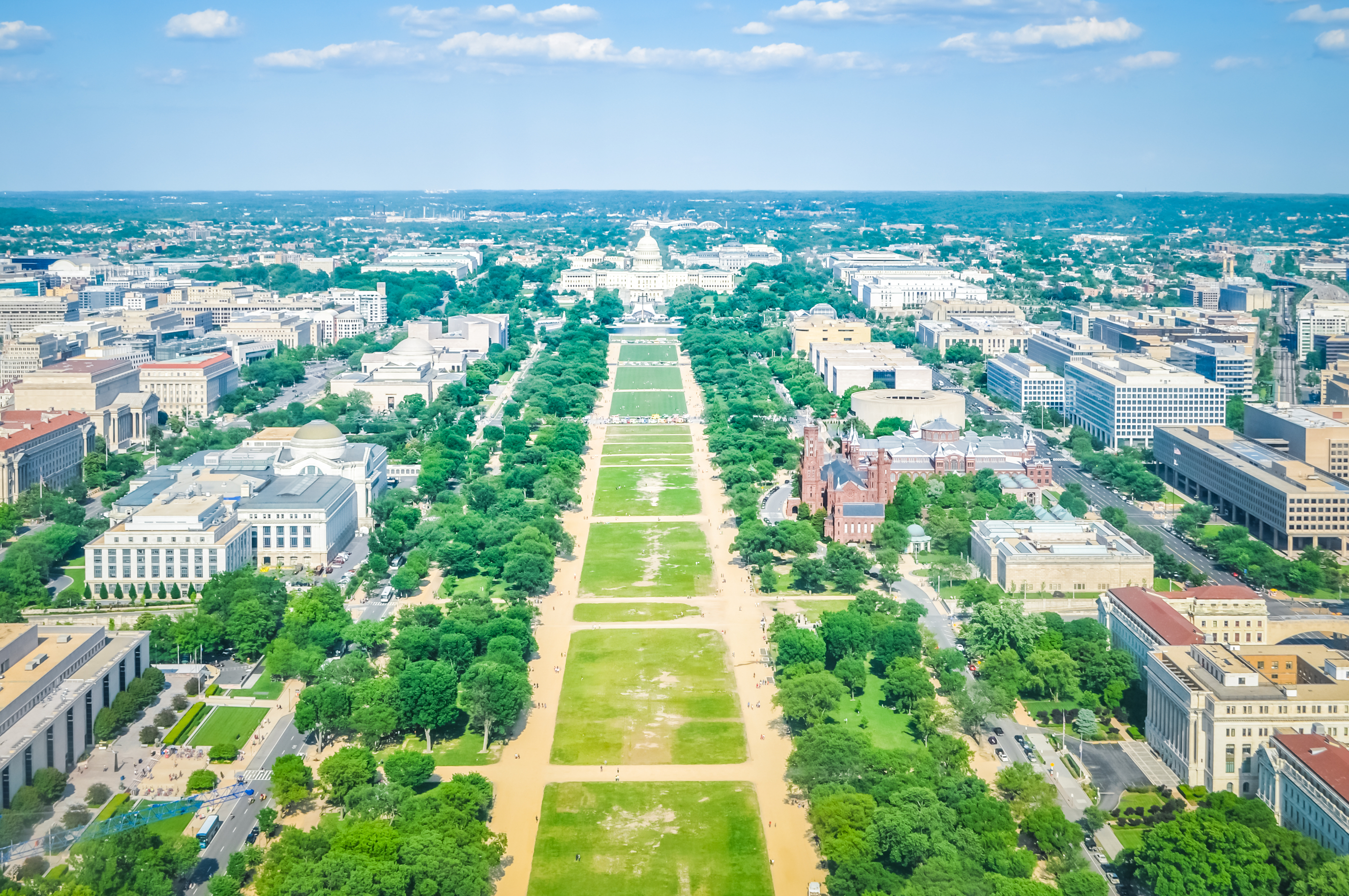
dreamstime_l_137321022

National Mall and US Capitol in Washington, DC © Victoria Shmakova Ananchenko | Dreamstime.com

Already, progressive Democrats are breaking from the President and moderate Democrats. President Biden seems unable to pass through Congress, over the unified Republican opposition, any more serious Democratic priorities. These initiatives include proposed legislation on voting rights reform, federally, criminal justice reform, defending abortion rights, increasing the federal minimum wage to $15./hour, and repairing a “broken” immigration system, according to the New York Times (“Democrats Struggle to Energize Their Base as Frustrations Mount,” 11/27/2021). Democrats are seen as falling short of some campaign promises, and “leaving their base unsatisfied and unmotivated before next year’s midterm elections,” according to the New York Times (11/27/2021).

With the Democratic base already uninspired about Democratic victories, it becomes even more imperative that Democrats, nationally, deliver on those legislative priorities that they can, in fact, deliver on. Democrats must pass the “centerpiece” of President Biden’s agenda, the social spending bill, especially if they cannot enact any of these deeper social reforms, nationally. The base is already failing to follow the Democratic Party lead. The voters beyond the Democratic base may question, also, whether the Democratic Party can achieve really anything when they have the opportunity, such as now, to do so. All of these reasons point to the political imperative for the Democrats to pass President’s Biden’s agenda, as much as politically possible, in order to prepare better for next year’s, 2022 mid-term national elections.

In November, 2021, however, we witnessed a moment of Democratic Party unity in Washington, DC. They came together and passed the $1 trillion infrastructure bill, which included economic and infrastructure investments, and an effort to respond to global warming (New York Times, 11/6/2021, p. A1). Time will tell if the Democrats can continue that party unity into December.

November, 2021, represented a moment of Democratic Party unity in Washington, and a moment of bipartisan achievement in the State of North Carolina. Elected officials were able to accomplish new legislation and take care of the people’s business in Washington and North Carolina this past November. Republicans in Washington would beg to differ. I understand that. The jury is out, however, on whether the Democrats in Washington can continue to deliver, and thus put forward a good face for voters next year, or not. In North Carolina, while I commend both political parties, Democrats and Republicans, for their bipartisan achievement this past November, I doubt sincerely whether that spirit of bipartisanship will continue. In North Carolina, although significant Democratic priorities will probably remain blocked, thanks largely to partisan differences, there remains some hope that one such priority, Medicaid expansion, can be achieved, after the current process of deeper reflection in committee runs its course.

Government in America continues, at this time, largely as it had, previously. We see some accomplishment, and the continued fulfillment of the basic responsibility of government, but we see, also, ongoing partisan divides, and the ongoing inability to reach any deeper level of agreement, at this time. Deeper change remains elusive, but the continuation of the current political and social context appears self-evident.

The only exception I see to this conclusion is the most recent shift in the US Supreme Court on abortion. Roe v. Wade seems as though it may be, once again, in flux. Even then, this potentially significant political shift represents the continuation of an ongoing divide and social struggle in the United States.

Perhaps, after all, in the United States today, there is nothing new under the sun. Except, that is, when something new manages to emerge.

—Nicholas Patti

Raleigh, NC

USA


North Carolina Still Without Budget, But I-77 Express Lanes in Charlotte Open

Here is my warning to North Carolina Governor Roy Cooper and the Legislature’s leadership: when you finish your work and fail to finish the basic business of state government in the United States of America, which is to adopt a budget for the state, voters feel vengeful. Specifically, they start to feel that “throw the bums out” may be necessary. This feeling impacts the leaders of both chambers of the state legislature and the governor, but it impacts the executive branch leadership, the governor, the most. After all, the buck stops here—at the governor’s desk, first and foremost. Just hear the sound of this: I hope that when the Legislature reconvenes in January, I hope they can adopt, with the governor’s consent, a spending plan for the current fiscal year. I know, I know, it is truly sad.

I commend the Democratic Governor, Roy Cooper, for taking all of his principled stands. Expanding Medicaid to cover the working poor, still possible under the Obamacare law, is a truly noble ideal. So, also, are granting teacher pay raises that amount to a significant percentage and annual increases. Nonetheless, the NC State Legislature was unwilling to grant either of these. They offered absolutely nothing on Medicaid expansion, and a notable compromise on teacher pay raises that could have saved face, if agreed-upon. No such compromise was available from the Governor’s office, however. Hence, we are left, this year, with nothing. No compromises, and ultimately, no NC State budget this year. We are left with, essentially, only paralysis. Total dysfunction in the halls of Raleigh. It is too bad.

North Carolina State Capitol Building
North Carolina State Capitol Building, Raleigh, NC, by JillLang, http://www.istockphoto.com

On the bright side, one past hold-up in North Carolina state politics has been resolved. The I-77 express lanes/toll lanes leading from Charlotte to the North have opened. Former Governor Pat McCrory was right, on his radio show, that this highway project helped to cost him the election for Governor. Now, under the next Governor’s watch, the I-77 lanes are open. This marks the completion of the project, one that promises to address and relieve some of the perennial congestion plaguing this road. It was wholly unpopular, but it has finished, and it is, finally, open. Therefore, despite popular opinion, the highway has been improved, and the notorious congestion will have been addressed, and hopefully, somewhat substantially relieved. State government has enacted a solution to address the problem of congestion on this important expressway. State leadership did something, and finished it.

Charlotte Skyline Sketch
Charlotte, NC, by chimpyk

The I-77 political open sore will no longer hurt the Governor. The failure to reach any agreement with state legislative leaders can hurt the Governor, however. I encourage compromise, and enacting a state budget for North Carolina. Standing up for noble ideas is all well and good, after all, but doing the state’s business is, I think, more important. I do not send out a call to “throw the bums out;” rather, I call on our good state leadership to come to their senses, to compromise, and to adopt a state budget.

You can do better than what you have done.

—Nicholas Patti

Charlotte, NC

Letter to Editor, on the 9th District

Letter to Editor, New York Times (12/10/2018, unpublished):

In response to “Winner Says He Backs Revote, if Inquiry Finds Fraud” (New York Times, December 8, 2018, p. A11):

December 10, 2018—Although the investigation of election fraud should continue by the North Carolina State Board of Elections and Ethics Enforcement regarding the 9th District for the U.S. House, in and around Charlotte, NC, the Board should publish its results soon after their evidentiary hearing on or before December 21. They should certify the election results, also, at that time.

A quick glance at the numbers: Republican Mark Harris won by 905 votes in the general, yet he only received 420 absentee votes from Bladen County, as opposed to 258 such votes in the County in question by his Democratic opponent, Dan McCready, according to The Charlotte Observer (12/6/2018, p. 1A.) Similarly, in the primary, Mr. Harris won by 828 votes, overall, and only received 437 absentee votes in the County, according to The New York Times (12/8/2010, p. A11) and The Charlotte Observer (12/6/2018, p. 1A).

These numbers do not undermine the election of Mr. Harris. However, those responsible for the fraud should be criminally prosecuted.

—Nicholas Patti, Charlotte, NC


Mid-term Post-election Recap

November 10, 2018—After all the divisive, rancorous rhetoric of the campaign, the mid-term election delivered a win for all involved—and some notable losses.

Our illustrious leader, President Donald Trump, scored big, for example, by holding the Senate. Impeachment is now officially off-the-table, due, in large part, to his vigorous campaigning for Republican Senate candidates. This means that when President Trump travels to Moscow for a love-summit with Russian President Vladimir Putin, and declares, “there was no collusion,” no one can correct him. Trump has support among a significant voting bloc of the American public, and his brand was triumphant. He is vindicated in the Senate.

The night was not a total wash-out for the Democrats, either, however. In a significant rebuke to President Trump, Democrats retook the U.S. House of Representatives. Democratic Rep. Nancy Pelosi is due to retake the speaker’s gavel, and Republicans everywhere are chagrined, to say the least. Democrats everywhere are heartened by their return to power in the U.S. House, as expected during the campaign. If their previously-hyped “blue wave”did not deliver a total Democratic takeover of the U.S. Congress this election, it was strong enough, at least, to account for one chamber of power, the House. They and their voters sent a clear rebuke to President Trump, and they won a significant victory. That victory includes subpoena power, just in case President Trump steps too far out-of-line.

U.S. Congress, Washington, DC
© Alisonh29 | www. stockfreeimages.com

So, the mid-terms delivered mixed results. There was a win for both parties, and a loss. Does this spell bipartisanship? Or, paralysis, due to a woefully divided government? Only time will tell.

In the American political grain, after all, 2020 starts in 2019. Only time will tell.

Washington Monument, Washington, DC
© Pgangler | www. stockfreeimages.com

In North Carolina, a similar dynamic could be seen at work. In every closely-contested race for the U.S. House in North Carolina, counting three, Republicans won. North Carolina is sending back a Congressional delegation that remains 10-3, Republican-led, unchanged in-full from before the election. In this way, the State of North Carolina bucked the national trend. Whereas nationally, Democrats re-took the House, in North Carolina, the delegation did not change, and Republicans held on to every single House seat, including all three of the toss-up districts. This outcome represents a clear victory for Republicans in North Carolina. These headline races were watched closely across the State, and Republicans won all three close contests to keep every single U.S. House seat, previously held before the election.

In another victory for the Republican party in North Carolina, the voter ID amendment passed. Now, the State is no longer finished with the requirement to show photo ID to vote; it is now a part of the State Constitution as an amendment. Also, the income tax limit amendment passed, another victory for NC Republicans, as well as the crime victims’ amendment and the hunting and fishing amendment. NC Republicans were behind all of these amendments, and they won; Republicans will now change the statutes in State law, to follow.

The last two amendments failed, but the Republican party was split on those two amendments. Republican governors, including recent, former Gov. Pat McCrory, opposed these last two amendments, as did former Democratic governors, as well. Those two were the amendments on judicial appointments, and the make-up of the State elections board. Those two amendments would have diluted the power of the office of Governor, and shifted it to the legislature. Those failed.

The State congressional delegation and the four amendments that passed, notably, the photo ID amendment, represented victories for the Republican party in North Carolina. In these areas, Republicans won in North Carolina.

In other areas of government and the election results in North Carolina, Republicans lost, and Democrats won. Democrats won by taking enough seats in the State legislature to remove the Republican supermajority there. This means NC State Republicans can no longer readily over-ride vetoes by the Democratic Governor, Roy Cooper. Democrats won these seats in the State legislature by taking urban and suburban districts in Mecklenburg County, and other urban areas of the State. Removing the Republican supermajority was a major electoral goal for NC Democrats, and the Democrats achieved this goal in North Carolina.

Another significant area of victory for Democrats in North Carolina was right here at home in Mecklenburg County, comprising the city of Charlotte, and suburbs. There was a “blue wave” in Mecklenburg County. Democrats won all seats on the County Commission, defeating three Republicans in previously Republican districts, and the at-large, Republican candidate. The Republican, minority opposition on the County Commission is now gone; the body is now entirely Democrat.

In addition, NC Democrats swept the state delegation from the Mecklenburg County area, leaving only one, or maybe, two Republicans standing. The suburbs had been reliably Republican, but the voting shifted in this election toward the Democrats. Repeated across urban areas in North Carolina, this spelled the end of the Republican supermajority in Raleigh.

The victory here for Democrats was in Mecklenburg County itself, and in urban areas across the State, reflected in the outcome of the Democratic gains in the State legislature. Republicans did hold on to their majority in the legislature, but they lost their supermajority. Removing the supermajority was the Democrats’ goal. They achieved this, and swept across Mecklenburg County.

NC Democrats could take home a victory on these counts. Therefore, both parties in North Carolina, similar to the national trend, won some, and lost some. The politics of the United States is divided, and resulted in divided government, as a result. North Carolina is known as a purple state, and similar to national politics, both parties could take away victories, and chalk up some substantial losses.

A divided body politic in the United States led to a more divided government, with trends going this way and that, in the recent election. Similarly, in North Carolina, true to its “purple state” identity, both parties could cite victories, and defeats at the ballot box. The main irony in this comparison is that North Carolina bucked the national trend in the election for the U.S. House, showing North Carolina as a red state, in this regard. Republicans won in contests for the U.S. House in North Carolina, bucking the national trend toward Democrats, yet Democrats in the State still made significant gains in the State legislature. Hence, North Carolina is still a “purple state,” with a unique identity in the broader body politic of the United States, itself. Both national parties will continue to concentrate efforts, therefore, in this State, since either party could still win here, in future elections.

North Carolina State Capitol Building,
Raleigh, NC, by JillLang, http://www.istockphoto.com

One little victory for President Donald Trump in North Carolina is that both U.S. House candidates that he rallied for, in a recent campaign rally this election season, held in Charlotte, NC, both won. In a year in which the President just lost control of the House in Washington, it is notable and comforting to him, perhaps, that the two House Republican candidates he personally campaigned for here, both won.

Perhaps, President Trump and national Republicans will cherish this silver lining here in Charlotte, when it comes to their losses nationally in these mid-terms for the U.S. House. Perhaps, these national Republicans, and the President, will appreciate the two Republican U.S. House Representatives from the Charlotte region, both of whom President Trump personally campaigned for, here in Charlotte, when they hold the party convention here in 2020.

It’s all peace-and-love, and all kumbaya for the Republicans here in Charlotte and nationally, but do not let anyone ask the actual U.S. House Representative for the district that actually covers the city of Charlotte. Democratic Rep. Alma Adams, a newly re-elected Democratic incumbent in a no-contest district, the 12th, may disagree. She just cruised to re-election, and she actually represents the city of Charlotte, itself. Not even President Trump dared campaign against her in the 12th. In true Charlotte style, however, and consistent with the state of North Carolina, the two nearby districts (which include South Charlotte, also) both went red. Charlotte will host the 2020 Republican convention, and can champion notable, Republican wins for the House. Democratic Rep Alma Adams, however, will remain silent. Also, she will remain in office.

I feel thankful that we had this recent mid-term election. It is a very good thing that we have periodic checks on power in this country via regular, national elections. It helps to re-align our elected leaders with the will of the people on a regular, frequent basis. Especially with this president, President Trump, we need to check on his level of support among the people in this country. He tends to veer off into never-never-land in his rhetoric, especially during the campaigns, and we need to check if he is actually representing any of the American people, still. It turns out, he is. President Trump and his party, the Republican Party, still command broad, popular support, or they would not have held on to the Senate. Meanwhile, the American people expressed growing opposition to the President and his party. Hence, the Democrats returned to the majority in the House, which is the chamber of Congress more closely aligned to the people, by direct population numbers, and less-so on geographic coverage and equal, geographic representation.

Opposition to the President is growing in the United States of America, but he still retains broad support. In the true spirit of American democracy, we are already looking forward to the next national election, 2020, for the Presidency, itself. Let us just hope there is enough peace, in the interim, to allow for good governance, and not simply paralysis.

—Nicholas Patti,  Charlotte, NC


My sources for this article are The Charlotte Observer (Charlotte, NC: in print and on-line, Nov. 6, 7, and 8, 2018).