
by Nicholas Patti
November 4, 2026, Wake Forest, NC—Yesterday, in the US national mid-term elections, the American people spoke truth to power at the ballot box, and the American people—and American democracy—prevailed.
American democracy prevailed, not because the American people repudiated President Donald Trump and the Republican party, which they did, but because the American people continued the tradition of voting out the President’s party from Congress in the mid-term election immediately following the beginning of the President’s term. President Trump himself saw this defeat coming; he commented as much on this pattern in a televised press briefing from the White House. In this briefing, he said that the President’s party loses the mid-term immediately following the latest Presidential election. He admitted he did not know why that was the historical fact, but it was. In this 2026 national mid-term, the polls were not wrong. The polls did not lie. Democrats won power in both houses of Congress, as a result. Before the election, President Trump read the writing on the walls. He simply did not know, as none of us knew, how dramatic the defeat would be.
It was pretty dramatic. Some are calling it a blue wave; others are calling it a blue tsunami. The American people ousted Republicans and returned Democrats to power in both houses of Congress. In the next Congress, Democrats will assume control in both the US House and the Senate. This renewed power for Democrats will spell the effective end of any further advance of President Trump’s and the Republican party’s agenda in the making of any new laws in Washington.
Let me return to the state and health of American democracy, as a result. When the American people vote out the President’s party from power in Congress in the mid-term immediately following the beginning of the President’s term, which they just did, again, yesterday, the American people are affirming their power in free and fair elections to hold the ruling party accountable, in Washington, once again. The American people continued that tradition of active and effective democracy in the elections, yesterday.
We should note that this pattern of democracy does not happen everywhere in the world. In Russia, for example, this democracy does not happen. There, the Russian president, Vladimir Putin, jails and/or kills leading opposition figures. When they hold a national vote for their parliament, the Duma, they vote Putin’s party into the majority, once again. That is despite a very unpopular war that Russia is waging against Ukraine. That war is killing hundreds of thousands of young Russian men, and Russia struggles to continue to fund that war. With the notable absence of free and fair elections in Russia, the Russian people are not free to repudiate their President’s party in their national elections for their parliament, the Duma. With the lack of any effective opposition, in Russia, the President’s party easily wins re-election.
That result is the opposite of what happens in America. Here, when the American people disapprove of the President, his Party, and their policies, the American people vote out his party from our Congress in Washington. The American people just did this again, yesterday. That remains the strength and the tradition of American democracy, in contrast with more authoritarian governments elsewhere in the world. American democracy remains strong and viable.
That said, in the American system, despite this loss in our Congress, our American President remains the President for the remaining two years of his term. I believe our founding fathers designed our system this way to increase the consistency of our government and policies, despite our healthy, representative democracy. Hence, President Trump will remain our President for the next two years, for the duration of his second, four-year term.
What does this mean for the incoming, Democratic Congress? A successful Congress passes new laws and gets things done for the American people, who elected them to lead them. Congress cannot do this without the assent, at least, of the American President. The new Congress cannot pass laws and get things done, cannot be a successful Congress, unless they work with President Trump. President Trump has already said, after the election results came in last night, that he is ready to veto any legislation he sees as bad for the American people. He said he would be known as “Mr. Veto.” Later on Wednesday, November 4th, on NBC television news, President Trump said he was ready to work with the Democrats in Congress, as long as they were being sensible, and ready to work with him.
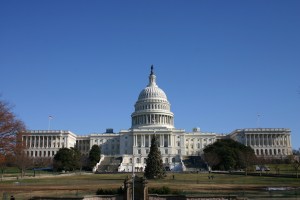
That is the difference, following the mid-term elections. Now, each side, and each political party, must work with the other side, the other party, if they are to get anything done, if they are to accomplish anything. Before the election, it was one-party rule—all Republicans, all-the-time. Now, with the inauguration of divided government, of two-party rule, once again, both parties are forced to work with each other, if they are to pass any new laws and be a successful Congress, on the one hand, and for President Trump, if he is to have a successful last two years of his second term, on the other.
The great American art of compromise will be the order of the day, once again.
Two-party rule returned to America, once again, in the national mid-term elections yesterday, once again. That is what we have in the United States, today: two-party rule, with a couple of independents, as well. I believe that two-party rule is far preferable to me than one-party rule, as is the case in many authoritarian governments, not true democracies, around the world.
Two-party rule in America shows the power, and the limits, of our democracy in America today. As American voters, we are constrained, or limited, by our choices: either Democrats, or Republicans, with a few notable exceptions, namely, independents. Our system of government may be less democratic than a multi-party, parliamentary system, but we are far more democratic than a one-party state. That, we do not have, officially so, after our national election last night. Our two-party democracy is alive and well, as proven yesterday, with some consistency in our government still built into our governing system. President Trump remains our President for the duration of his four-year term, despite his party being voted out of power in Congress last night.
With a healthy two-party democracy still in place in America, we can all be proud to be Americans, once again. This includes Republicans, even if they did lose the election, largely, last night, and yes, it still includes our American President, President Donald J. Trump, as well. As Americans, we can be proud of our democracy, and thus, proud of our ongoing national democratic tradition and identity, as well.
American democracy lives on. Both parties deserve congratulations for participating, of course, and the Democrats, and all of their victorious candidates, deserve special congratulations, in particular, for winning the election.
That having been said, let us investigate more of the details of the outcome of this election, both nationally, and in North Carolina, in particular.
“The days of Trump’s supplicant Senate are over,” Democratic Senator Chuck Schumer of New York said on CNN on November 4th, the day after the election. He continued, “we will deliver for the American people.” Senator Schumer is the presumptive incoming majority leader of the Senate in the new Congress, although that actual election in the Senate remains to be seen. No one has stepped up, at this point, to oppose his re-taking of that Senate high office.
I support Senator Chuck Schumer to re-take the majority leader position in the Senate, and I support his approach to leadership in the Senate. I do not think he should betray Democratic Party values and policies in the Senate, but I do support him trying to accomplish new policy for the American people. Again, as I noted earlier, he must work with President Trump to accomplish anything in the new Senate, but now, as Senator Schumer stated, Trump cannot accomplish anything without working with him and the Democratic party in the US Senate. I believe that represents a good, balanced, and strong approach to leadership in the Senate, especially from a Democratic party perspective.
Let us take a closer look at the US Senate election in North Carolina, in particular. In North Carolina, Democrat Roy Cooper was elected as the new, incoming senator. He defeated Republican Michael Whatley. The seat was open due to the retirement of US Senator, Thom Tillis, Republican, who had a falling-out with President Trump and who did not run for re-election, himself. Tillis supported the Republican, Michael Whatley, in this race for US Senator from North Carolina. Cooper’s election represents a switch from Republican party representation to Democratic party representation for this US Senate seat from North Carolina.
As a Democrat myself, one who voted for Roy Cooper, I would like to congratulate Roy Cooper on his victory in yesterday’s mid-term election here in North Carolina. Cooper ran an effective campaign and proved to be a candidate who was just too good to beat in North Carolina. Cooper is a former two-term governor of North Carolina, and served as the state Attorney General, before that. He remains one of the most well-known and popular politicians in the State of North Carolina. Now, North Carolina is sending him to Washington to represent us. Incoming Senator Cooper deserves congratulations on his election and for his successful campaign, once again, here in North Carolina. I wish him the best of luck in his new role in Washington on behalf of the people of North Carolina. I think he will represent us well.

That said, I would like to step back and compare some of his stated policies from the campaign against Republican candidate Michael Whatley’s stated policy priorities, from the campaign. Both candidates spoke up for affordability, but each had a different approach to achieving it. Whatley promised to uphold President Trump’s agenda. Specifically, he was quoted as saying, as reported in the News & Observer (Raleigh, NC), that he would “create jobs, raise wages, expand opportunities, and make our state affordable again.” He told McClatchy, the News & Observer’s media corporation, that he wanted “North Carolina families to be able to ‘take home more money and keep more money’” (News & Observer, Raleigh, NC, 9/24/2026, p. 8A, print edition). That means Whatley supported less government spending, and lower taxes. He would have supported President Trump’s Big Beautiful Bill that cut over $1 trillion in government programs, and included tax cuts. This law was passed by President Trump and the Republican Congress in 2025, and represented the cornerstone of President Trump’s legislative agenda. In fairness, however, Whatley was not asked about this singular piece of legislation, itself. He simply stated that he supported Trump’s agenda, and that he wanted to allow North Carolinians to keep more of what they earned, as I quoted earlier, which means lower taxes.

Roy Cooper was different. Cooper was singularly focused on lowering costs for North Carolinians. Cooper’s television ad blasted in big letters on the screen, “Make Stuff Cost Less.” Cooper publicized a four-point plan to lower costs. This included lowering grocery prices, by ending tariffs, lowering costs for farmers. He would block any further mergers of grocery giants, which would lower competition. He would ban the grocery stores from using algorithms to increase prices on specific items. Finally, he would ban grocery stores from coordinating prices and supplies to drive up prices. Cooper’s plan mentioned, also, lowering costs, aside from groceries, on healthcare, utility and energy costs, housing costs, and making child care affordable. For example, Cooper wished to prevent landlords from using algorithms to raise the rent on tenants (News & Observer, Raleigh, NC, 9/24/2026, p. 8A).
Side by side, Cooper’s plan won the day in the election. Whether Cooper can deliver on any or all of these proposals in the US Senate remains unknown, but at least he has a plan. Also, Cooper is a popular former two-term governor. People feel they can trust him more, as a known quantity in North Carolina. Therefore, Cooper won the election, hands-down.
Let us examine another example of the effects of President Trump’s legislative agenda, namely, the significant cuts to the US food stamp program included in the One Big Beautiful Bill, passed in 2025. This law was a centerpiece of President Trump’s and the Republican Party’s legislative agenda. Advancing that agenda even further will now be blocked in Congress by the Democrats. Let us look, however, at one effect of those government spending cuts from Washington. This bill increased the amounts that states would have to pay to fund the food stamp program, and added strict work requirements. SNAP enrollment, which is food stamps, has fallen by over 5 million people since Trump signed the legislation in July, 2025, according to the US Department of Agriculture, as reported in USA Today (10/9-11/2026, pp.1A, 4A, print edition).
Although President Trump and the Republicans in Congress instituted a new tax cut in 2025, he and they also cut 5 million people off of the federal food stamp program. For those 5 million people, at least, that definitely increases costs, specifically for food, and groceries.
Contrast that record with Senator-elect Roy Cooper’s four-point plan to lower grocery prices. The Democrats in Congress opposed that 2025 legislation, and so would have prevented the trimming of the food stamp rolls by 5 million people. The Democrats in Congress in 2025, however, opposed the tax cut included, as well.
Looking at the contrasting plans of Michael Whatley and Roy Cooper, during the campaign, and the difference in the two parties’ approaches to lowering costs for the American people, sheds more light on the national difference between the Republican and Democratic parties on the signature campaign issue of affordability for the American people. In this mid-term election, Democrats punished Republicans for the high cost of living, currently, and promised to prioritize affordability, if elected. Now that the Democrats will be taking over in Congress, we will see if the Democrats can deliver on the promise of making life more affordable for Americans, today. President Trump promised exactly that in the 2024 election, which he won, but Americans felt that he failed on that campaign promise. This feeling could be seen in the results of the mid-term elections, this year.
Back to the national election. The major issues in this year’s mid-terms were, front-and-center, affordability for the American people. Namely, the high cost of gas and diesel fuel was a big issue. People voted against the war in Iran, which caused the extremely high gas and diesel costs. People voted against Trump’s new tariffs, especially in border states with Canada, namely in Maine and Michigan. People voted against the excessive abuses by ICE, Immigration and Customs Enforcement. The Republicans largely lost the Latino vote in this year’s mid-terms, which Trump had just largely won, back in 2024. Finally, while Americans were struggling to make ends meet, President Trump was amassing billions of dollars in personal wealth while in office. This gave Trump the appearance of corruption, which voters soundly rejected. In Trump’s defense, Republicans always accuse the Democrats of corruption in Congress, also. With Republicans in control of both houses of Congress and the Presidency, however, those Republican accusations fell short to the average American voter. The Democratic accusations of corruption, in contrast, hit a nerve for American voters.
It was a combination of all of these issues that led to the Democratic blue tsunami in this year’s mid-terms. Before I conclude, let me return to the current war in Iran, which voters just rejected in this mid-term election. My position on the war remains unchanged from my previous blog post. I am against the war, and for making peace. That means negotiating a peace that does not demand everything from the other side, but only achieves some of what each side requires. I support the immediate re-opening of the Strait of Hormuz by Iran. While the Strait of Hormuz is closed by Iran, however, which causes gas and diesel prices to skyrocket, not to mention home heating oil, as well, I support the US Navy and President Trump to impose a naval blockade on Iran. I oppose any renewed strikes or any renewed bombing of Iran, including under the current naval stalemate in the Strait of Hormuz and against the Iranian ports and sea-based shipping. Again, I am against the bombing of Iran. Renewed hostilities do not bring about peace, in my view. Instead, realistic negotiations do. President Obama, on the campaign trail in this year’s mid-term election, touted his anti-nuke deal with Iran, years ago, that President Trump immediately rejected in President Trump’s first term, back in 2016. Negotiations are possible, is my only point here. Peace is possible, if both sides sincerely try. I am for peace, and against war, and specifically against any renewed bombing of the country and the people of Iran.
Hopefully, Iran and the US can resolve, through negotiations, the naval stalemate in the region. I should point out that it is Iran’s military closure of the Strait of Hormuz that causes the sky-high gas and diesel prices. The American people voted their pocket, and voted against the American President’s party, largely in response to these high prices. Not only did President Trump and the Republican party fail to lower costs, they made it far worse, through the war against Iran. American voters were having none of it in yesterday’s mid-term elections.
Finally, the numbers. No, not the gas prices, what Americans are currently paying at the pump. I mean, the actual election results, as of November 4th, the day after the elections. The US Senate broke down at 54 Democratic senators, and 44 Republicans, with two races still too close to call. The US House resulted in 231 Democratic House Representatives and 139 Republicans. 51 senators are needed to control the Senate, and 218 representatives are needed to control the US House. A couple of independents were elected or hold seats in Congress. With these numbers, the Democrats will assume control of both the US House and the Senate in the new Congress. That Congress will remain seated for two years, which represents the remainder of President Trump’s second term.
These numbers are news for the Democrats to rejoice about. As for Republicans, they will have another chance at it in two years. That is when the Congress will be up for election once again, and a new President will be elected then, also. The Republicans can be grateful that President Trump remains in office for the next two years from now, also. The remainder of his second term remains unaffected by the vote this year.
As for me, I am happy with the outcome of these mid-terms. In 2024, I endorsed Kamala Harris. She lost big to President Trump in that election. This year, I withheld any endorsements. Instead, I decided to post on my blog my reaction to this year’s mid-term election results. This year, I voted in synch with the majority of voters in this national, mid-term election.
The main point for me, however, on this blog post, is the higher goal of the state of American democracy, in general. It appears to me that, regardless of party, our two-party democracy in the United States of America remains healthy and active.
As Americans, we can all be proud of that fact—win or lose.
—Nicholas Patti
Wake Forest, NC
USA
Additional Sources:
CNN, television, 11/4/2026, 11/3/2026.
WRAL news, WRAL, WRAL+, Raleigh, NC, 11/4/2026, NBC, television news.
NBC News Daily, NBC, 11/4/2026, television news.
ABC news, 11/3/2026, television news.
News and Observer, Raleigh, NC: “Cooper vs Whatley: North Carolina economic policy clash,” Danielle Battaglia, 9/24/2026, p. 1A, print edition, newsobserver.com.
USA Today Weekend: “Millions lose food aid in new SNAP rules,” Sarah D. Wire, 10/9-11/2026, p. 1A, print edition.

