
My podcast is in production. I will publish the podcast on my site and post a blog entry when it is ready.
August 1, 2018
My podcast is in production. I will publish the podcast on my site and post a blog entry when it is ready.
August 1, 2018
Charlotte, NC, July 31, 2018—One man has not forgotten the effective campaign slogan of former President Bill Clinton in his campaign in 1992 against former President George H.W. Bush: “It’s the economy, stupid.”
That man is current President Donald J. Trump. In his campaign for Republicans in the mid-term elections this Fall, President Donald Trump is touting the economy as a central achievement, according to The Charlotte Observer (July 28, 2018). The economy is doing great, too, including in North Carolina.
Gross domestic product grew in the United States at a pace of 4.1 percent in the second quarter of 2018, according to the Commerce Department, as quoted in The Charlotte Observer (July 28, 2018). This growth rate places the United States on track for its best year in over ten years, according to Ben Casselman, as he reported in The Charlotte Observer.
In North Carolina, according to Mark Vitner, senior economist for Wells Fargo Securities in Charlotte, the unemployment rate has dropped down to near 4 percent. That figure is down from the double digits a few years back, during the “Great Recession,” he claimed in The Charlotte Observer (July 18, 2018). Now, there are nearly as many jobs open and available in North Carolina as there are unemployed people. That low unemployment figure tells of a rosy picture in the economy in North Carolina, I would argue.

The economy is doing just great, and although I am a Democrat, I think President Trump deserves credit on this issue. I cannot fall in line in agreement with President Trump’s policies on trade and taxes, although I recognize, as economic experts point out in the July 28 article in The Charlotte Observer, low taxes serve as a stimulus. Although I see the failings of an internationalist neo-liberalism—this economic globalism further enriches the wealthy, while leaving large segments of the working-class behind—still, I cannot line up behind simple economic nationalism, either, or “America First.” Substitute your country’s name in that slogan, and you have the international vision behind that economic world order. This nationalism seems misplaced, misguided, over-simplified, and self-serving. It is the epitome of the “ugly American” in the world, when applied to the United States. It is one thing to have one of the strongest economies in the world, and I do not doubt the truth behind President Trump’s words on this one, but it is quite another thing to dismiss out-of-hand the fates and fortunes of the rest of the world, including major trading partners. We should be able to strive for a better vision of the world, one better than simple economic nationalism and self-indulgence at others’ expense.
Nonetheless, the economy in the United States, and North Carolina, is responding like an engine when someone hit the gas pedal. Acceleration is the word. This will only help the Republicans in the mid-terms.
What, then, of the so-called blue wave? This wave refers to the Democratic edge in the polls and by political prognosticators, who agree that Democrats are on-a-roll, according to a report in The Atlantic (web edition articles, July 27, 2018), for example, or again, The Charlotte Observer (July 25, 2018).
Let us look at one congressional district, the 9th, in and around Charlotte, NC. This one is considered generally Republican, yet a poll by the Civitas Institute (based in Raleigh, NC) has the Democrat, Dan McCready, ahead of his conservative opponent, Mark Harris, by 7 points, according to The Charlotte Observer (July 12, 2018). The margin of error in the poll is 4.6 percent. That indicates a close race, with the Democrat holding the edge.
Another recent poll by the same group, however, was just proved wrong in the Republican primary, in that district. There, a Civitas poll had the Republican incumbent, Robert Pittenger, ahead by 32 points, during this year’s Republican primary. In the election, held this past May, Mark Harris beat Pittenger by 828 votes, according to The Charlotte Observer (July 12, 2018). The more conservative candidate won, in defiance of the poll numbers.
Taking into account this poll, the conservative nature of the district, and this year’s Republican primary election outcome, I would argue that this district remains a toss-up. The district counts as one of those Republican districts that could fall to Democrats in Congress, but we see that it is a toss-up, I would argue.
Democrats do have momentum going into this Fall, I think. If the economy remains a top issue, like it was for President Clinton in 1992, however, then do not count out President Trump and the Republican party.
Only time will tell.
—Nicholas Patti
Thanks for joining me!
Good company in a journey makes the way seem shorter. — Izaak Walton

July 14, 2018–
On the political wind in the United States of America:
The whole country is waiting on the mid-term elections. Will there be a momentous blue wave sweeping Democrats into office? This is unknown. Will the election be the President’s day for the Republican party? This is also unknown. We are all waiting on the November elections to see the current direction of the country. I think the election comes down to a strong economy, for the Republicans, vs. President Trump’s ongoing excesses and antics, for the Democrats. President Trump does not look good right now, but the country is humming along, doing great. What will the American people decide in this election to determine the Congress? This is unknown.
On President Trump’s Supreme Court nominee, Brett Kavanaugh:
The confirmation process will be predictable. There will be some delay and hard questioning by Democrats, but ultimately, they will not be able to stop this nominee. He will be approved along party lines, before the elections in November. His appointment will mark another victory for the Republicans, and it will continue the trend toward a more conservative Supreme Court under President Trump. The long and short of it all? President Trump will have delivered again for his conservative political base.
On President Trump’s ongoing legal trouble:
Once again, this outcome depends on the mid-terms. A Republican Congress equals a safe President Trump. A Democratic Congress? President Trump will have serious legal trouble, possibly impeachment. In this light, the scandal appears political, aside from the separate issue of Russian interference in our elections, which can be handled separately. Both candidates in the 2016 presidential election had international connections. Now-president Trump made great hay as a candidate of Hillary Clinton’s Clinton Foundation, and all of the funding, internationally, she openly received there from supporters and governments around the world. President Trump’s Russia ties are not to be blown out-of-proportion.
What does this mean for the trial of Paul Manafort, President Trump’s former campaign manager? It means nothing. These people are not above the law, routine connections or otherwise. If he broke federal law, he will be found guilty. If not, then prosecutors should not waste our time. My feeling is that he will be found guilty, but we will not know that until the trial actually happens.
On the World Cup, Russia, 2018:
Viva la France!
–Nicholas Patti
Charlotte, NC
O.k.,
maybe not
a
million,
maybe not
even
one-hundred
million,
but
one billion dollars.
“That sure is
a
pretty little
thing,”
the woman
said
of
the new train
on
the new,
light-rail
passenger
line.
“Does it
do
anything?”
The
initial ridership-number
results,
just in,
for
the new
Lynx Blue Line
extension
to
North Charlotte,
North Carolina,
were
mixed.
Add to that
a
stock quote
from
the agency’s
chief
executive,
John Lewis,
about
“the community’s
acceptance”
and
“transit options”
and
“an alternative
to
traffic congestion,”
according to
The Charlotte Observer,
and
you have
the
results.
The
quote
sounds
real nice,
and
they say
Saturdays
were
a big hit,
but
the
question
remains:
“does it
actually
do
anything?”
Come on,
it
just
opened,
and
the trains
and
the new
station platforms
are
all
beautiful.
Smooth
ride,
just
beautiful.
 |
|
Lynx Blue Line train at station
on original section of track,
photo from Yelp images
|
Coming in
at a price
tag
of just
over
one billion dollars,
however,
I
sure hope
it
“does something.”
—Nicholas Patti
May 4, 2018–Although my recent posts have come from New York City, Charlotte, NC, and Albany, NY, I was living in New York City. Now, I have moved back to Charlotte, NC. My posts will be originating out of here, Charlotte, NC, at this time.
 |
| Charlotte, NC |
May 18, 2017–Voting rights and civil rights advocates in North Carolina won a major victory this past Monday when the U.S. Supreme Court refused to hear an appeal of the ruling from the 4th U.S. Circuit Court of Appeals last summer that struck down the 2013 NC Voter ID law. This decision by the U.S. Supreme Court ends debate on this particular, onerous law as it passed in North Carolina in 2013, and finalizes its repeal, according to The Charlotte Observer (May 15, 2017, website) and The New York Times (May 17, 2017). I applaud this decision and the final repeal of the 2013 NC voter ID law.
The end of the struggle against the NC voter ID law represents a major victory in the ongoing battle to sustain the currently relevant right to vote in North Carolina. The NC voter ID law had chipped away at that right, and the effort to diminish the right to vote in North Carolina has been defeated, at least for now.
In an earlier blog post in which I interpret and celebrate NC Governor Roy Cooper’s election, I predicted that the days remaining for that law in the federal courts were numbered, now that a Democrat occupied the governor’s office. The voter ID law had already been struck down at the 4th Circuit, but an appeal remained to the U.S. Supreme Court. That forecast of mine in my earlier blog post turned out to be accurate, now that the Supreme Court has refused to hear an appeal.
Republican Party leaders in North Carolina have vowed to write and pass a new law to accomplish the 2013 law’s goals and that could pass federal judicial review. The Republican Party controls the state legislature in North Carolina, so theirs is no idle threat. Passage of such a new law would be difficult, however, in the current political climate of North Carolina, which features Gov. Roy Cooper, Democrat, as the current governor.
“…Republican legislators will continue fighting to protect the integrity of our elections by implementing the commonsense requirement to show a photo ID when we vote,” said NC House Speaker Tim Moore in a joint statement with NC Senate Leader Phil Berger, as quoted in The Charlotte Observer (May 15, 2017, website). There may well be more-to-come in North Carolina on this issue, then, but at the very least, the 2013 voter ID law has now been repealed, finally.
Leaders of the struggle against the 2013 law in North Carolina over the past few years, including the Rev. William J. Barber II, President of the NC NAACP, were thrilled at the news of the U.S. Supreme Court’s decision. The NAACP had filed the lawsuit against the law, and in a news conference in Raleigh, NC, when the ruling was announced, people in attendance broke into a standing ovation and a chant, “Forward together, not one step back,” according to The Charlotte Observer (May 15, 2017, website).
Nationally, according to analysis in The New York Times (May 17, 2017), the decision about the North Carolina law represents a temporary victory in a broader, ongoing struggle, according to Heather K. Gerken of Yale University, as quoted in The New York Times. More cases on similar laws relevant to voting rights, federally, are pending in front of the Supreme Court, regarding Wisconsin, Texas, and even North Carolina, in a different instance.
Although the struggle is far from over, nationally, and even in the State of North Carolina, in the long-term, this current ruling by the U.S. Supreme Court, in which the Court rejects the appeal of the federal repeal of the 2013 NC voter ID law, this final defeat of the 2013 NC law marks a major victory for the struggle to maintain voting rights in North Carolina, and nationally. I applaud this ruling and celebrate this moment in our common, shared history.
–Nicholas Patti
Charlotte, NC
April 15, 2017–I add my voice to the growing chorus of voices to welcome the State of North Carolina back into the fold of the other 49 States in the United States of America. The current mayor of Charlotte, NC, Jennifer Roberts, joined fifteen other mayors across North Carolina to call for an end to the travel bans to this State, according to The Charlotte Observer (4/15/2017). Ms. Roberts was the author of the original, local anti-discrimination ordinance in Charlotte that granted access to transgender men and women to the bathroom of their choice, and that banned discrimination against LGBT people in Charlotte. That local law prompted HB2, the obnoxious State law that overturned her anti-discrimination ordinance and institutionalized discrimination based on sexual orientation, statewide. HB2 has been overturned by North Carolina, following the lead of the new, Democratic governor, Roy Cooper. As part of the deal, the original Charlotte ordinance had already been repealed, some months ago. About the replacement law, HB142, Governor Cooper was reported to have said that he would have liked it to have gone further, but that this compromise was all he could achieve, in terms of a compromise with NC Republicans in the State Legislature, who followed his lead and repealed HB2. North Carolina should be understood to be no pariah State any longer.

steel beams
in the construction site
over
what used to be
nice, little Spanish
here in the Lower East Side
Manhattan.
across the street,
from
the McDonald’s,
where I had
egg mcmuffin
sandwich
fresh, hot coffee.
I wish
I could have had
a
hash brown,
cooked
hot,
to
complete the breakfast
meal deal,
but the extra
dollar-and-a-half
would have been
too much
for me to spare.
I miss
the ketchup
I could have had
with it, too.
I savored
the coffee, though,
and
the few moments
of bliss
biting into the
breakfast sandwich,
as well.
Outside,
swirling about
in
the balmy, January air,
against
a grey sky,
but low
to the ground, mainly,
pigeons and sea gulls
are flying, nearby.
There
are lots
of
hungry people
sleeping,
probably,
down below
in
the subway
station,
underground.
None
have
come up
as of
yet
this morning
to
this McDonald’s.
Last night,
within
a couple of city blocks,
in
this neighborhood,
I read
that over one million
people
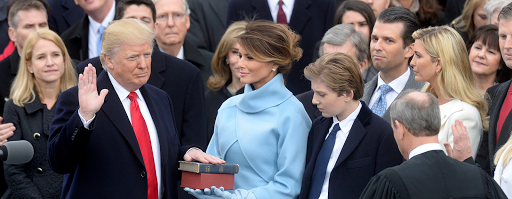
protested President Donald J. Trump’s
inauguration
in Washington, DC,
and protested here
in New York
and other cities
across the country.
The news
said, also, that roughly 800,000
people
turned out to celebrate
the swearing-in
and the new, conservative President’s speech,
here
in New York,
partisan.
Here in the Lower East Side
life continues
to
New York, NY
December 30, 2016–In a year in which Democrats lost the White House and loosened their grip on governors’ mansions from 31 to 33 in Republican control, according to the New York Times (12/5/2016), the experience of one state stands out. In North Carolina in 2016, Democrat Roy Cooper defeated Republican incumbent Pat McCrory in a pivotal and closely-contested election.
North Carolina is a divided state along partisan lines. The turnover in the Governor’s office, although not the State Legislature, shines a ray of hope for Democrats in an otherwise bleak election year. Liberals and activists fought so hard against the conservative McCrory through his entire term that inauguration day on January 7th will mark a milestone for Democrats in North Carolina, in the larger South, and nationally. The turnover of power reminds Democrats nationally in the United States that hope for the future remains viable for their party despite the loss of the Presidency to the Republican, Donald Trump, in a bitter national election.
 |
| Democrat Roy Cooper in a campaign photo |
Writing on The Guardian website (UK: London, 12/20/2016), Richard Wolffe is wrong to discount the significance of the results in North Carolina for Democrats nationally, and in fact for Democrats’ faith in American democracy itself. He argues that due to Republicans chipping away at the appointment powers of incoming Governor Cooper in North Carolina, after the election, that somehow the basic fact of the hand-over from Republican to Democrat in that Governor’s office is substantially less meaningful. I disagree. While the Republicans are definitely being cheap in reducing some of the incoming Governor’s power, the Governor still has the authority to defend or drop state support for the voter ID law, for example, that McCrory stood behind so adamantly. Wolffe makes much hay of the voter ID laws across the South in his commentary, also, in which he disparages the state of democracy in America, centrally, after Trump’s victory via Electoral College, but not in the popular vote.
The voter ID law probably will have its days numbered in the federal courts after Democrat Roy Cooper’s win in North Carolina. Unlike Wolffe’s view that the experience in North Carolina is insignificant, even somehow part of the bleak record for Democrats nationally in 2016, I would argue that North Carolina’s watershed moment in the State and in the broader South gives Democrats sorely-needed hope and relief in an otherwise-difficult year.
If it is possible to have accomplished such a tremendously important triumph in North Carolina, it is still possible to accomplish the same on the national level in the future. All is not lost for Democrats since Donald Trump is taking the White House on January 20th. Look at North Carolina. There is still hope for Democrats in the future in the United States of America, and the prospects for American democracy itself are still good, not faltering.
–Nicholas Patti

